


Ecotone I-III
part of Ground Truthing, solo exhibition at the Francis McCray Gallery, Silver City, NM
Ecotone is a series of three, double-sided, hanging drawings that explore the interdependent relationships between humans and nature. Reishi (ganoderma lucidium) mycelium composite is placed onto paper in a low-relief and slowly consume printed images of human traces in the land. Based on where the composite material was placed on one side, the mushrooms create a drawing in response on the other. As the mycelium grows, it slowly consumes the paper and printed images, reclaiming spaces of human extraction and intervention.


Ecotone I
2026
Reishi mycelium (Ganoderma lucidium), hemp hurd, hardwood shavings, xanthan gum, guar gum, screen print, xerox toner transfer, 3D printed grommets, mason line.
54” x 70” x 5”


Ecotone II
2026
Reishi mycelium (Ganoderma lucidium), reishi spores, hemp hurd, hardwood shavings, xanthan gum, guar gum, screen print, xerox toner transfer, 3D printed grommets, mason line.
64” x 85” x 5”


Ecotone III
2026
Reishi mycelium (Ganoderma lucidium), hemp hurd, hardwood shavings, xanthan gum, guar gum, screen print, xerox toner transfer, 3D printed grommets, mason line.
32” x 70” x 5”


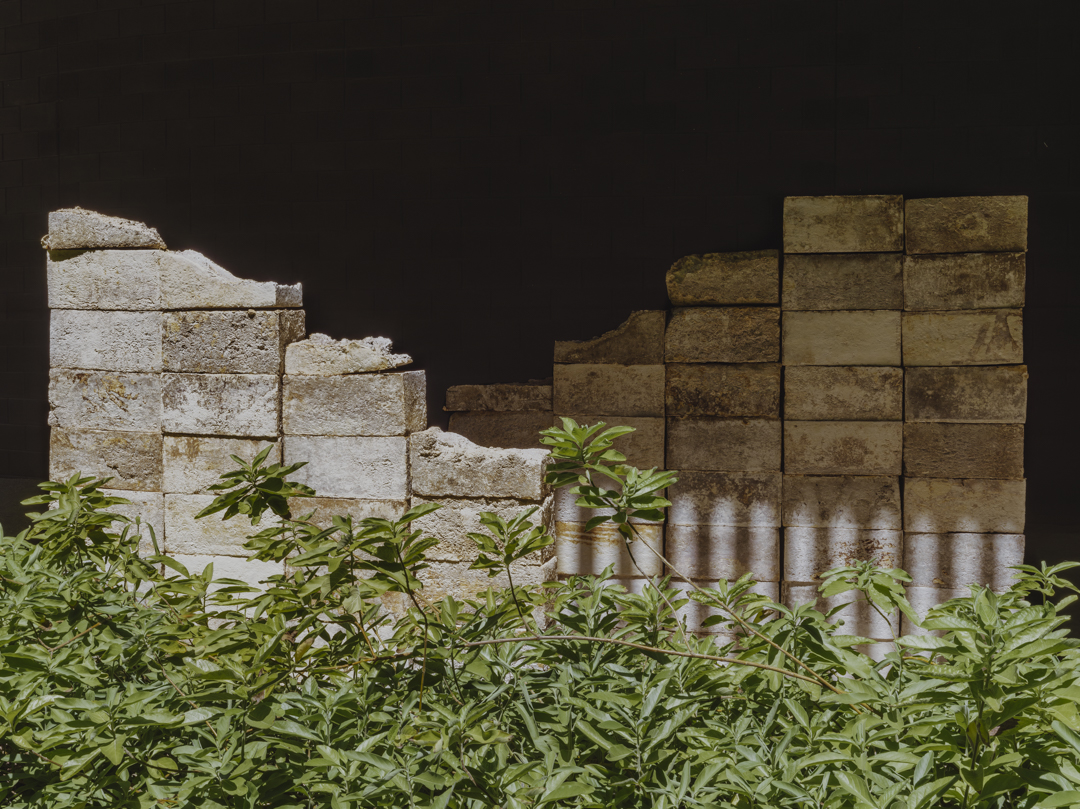
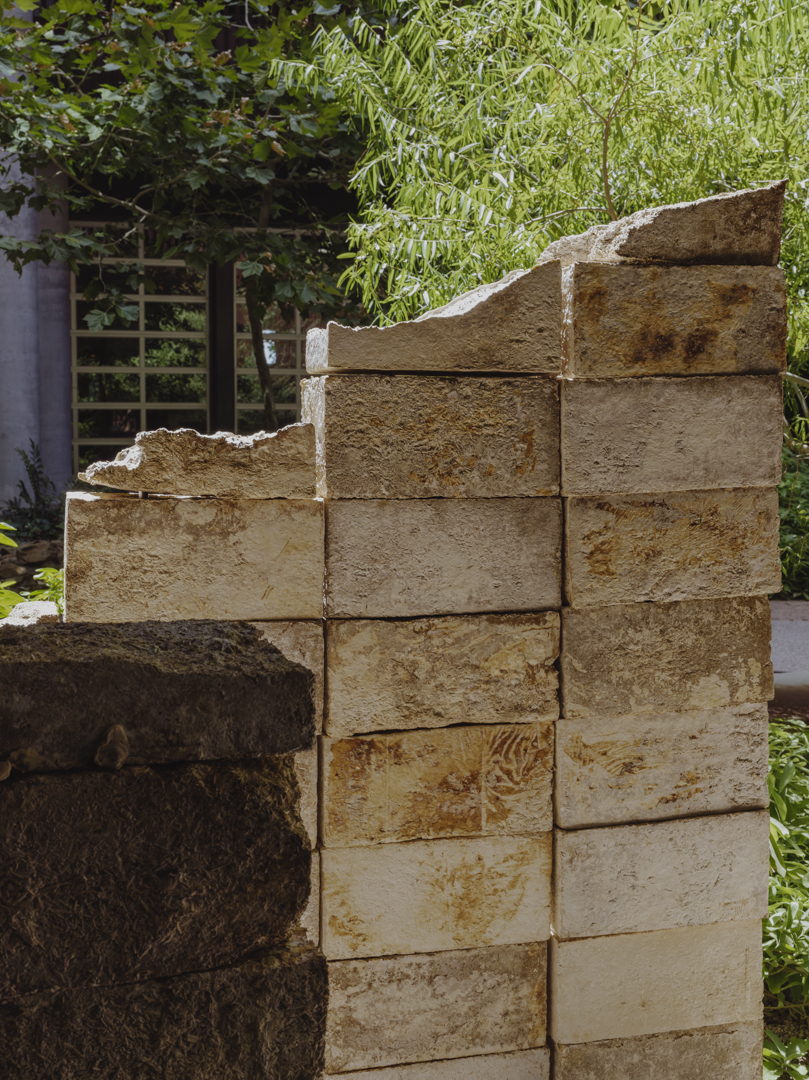
Ruins (mycelium wall #3)
January 2025 - presentThe third and final interation of the mycelium wall is installed permanently at the Land With No Name, a non-profit sculpture sanctuary west of Tucson, AZ.
Ruins (mycelium wall #3)
2023-25 (on-going)
Wall #1: 68”h x 80” w x 8”d
Wall #2: 66”h x 64” w x 8”d
Reishi mycelium, hemp hurd, and steel
2023-25 (on-going)
Wall #1: 68”h x 80” w x 8”d
Wall #2: 66”h x 64” w x 8”d
Reishi mycelium, hemp hurd, and steel
learn more about this project here





Ruins (mycelium wall #2)
August 23rd through December 2024Environmental Natural Resource 2 (ENR2) at the University of Arizona, Tucson, AZ
Installed with support from the Arizona Institute for Resilience.
Ruins is a sculpture created in collaboration with mycelial networks. Mycelial hyphae form tight webs that bind materials together as the enzymes they secrete start to decompose the substrate they live within. Utilizing this natural process to create Ruins, living material was grown into standardized block forms and removed when it suited the needs of the project. However, the mycelium behaved in unexpected ways, continuing to thrive even after the bricks were removed to dry, developing striking colors across the surfaces, and sprouting fruiting bodies.
Through both process and shape, Ruins demonstrates the interactions between human and non-human entities. The sculpture echoes the remains of human-built structures; yet the bricks themselves are created through a highly complex natural process. Each block consists of tightly woven mycelial hyphae which grow by branching out in an endless pursuit of expansion.
Entangled in almost every ecosystem on earth, mycelium holds soils together, forms symbiotic relationships with plants, and accelerates decay while making space for life to emerge. In contrast to humans who have created stark separations between ourselves and the natural world, mycelium evolved reciprocal relationships with other organisms. Many plants rely on the nutrients provided by mycelium, and vice versa. Intertwined, they form a life raft that increases their collective chance of survival.
After its display in the ENR2 courtyard, Ruins will be installed permanently at The Land With No Name, an outdoor desert sculpture sanctuary west of Tucson. Over time, the structure will invite both new growth and decay as the material begins the decompose. The evolving sculpture illuminates how natural organisms will evade restraint for as long as we continue to attempt to restrain them
learn more about this project here
photos by Alexis Joy Hagestad.

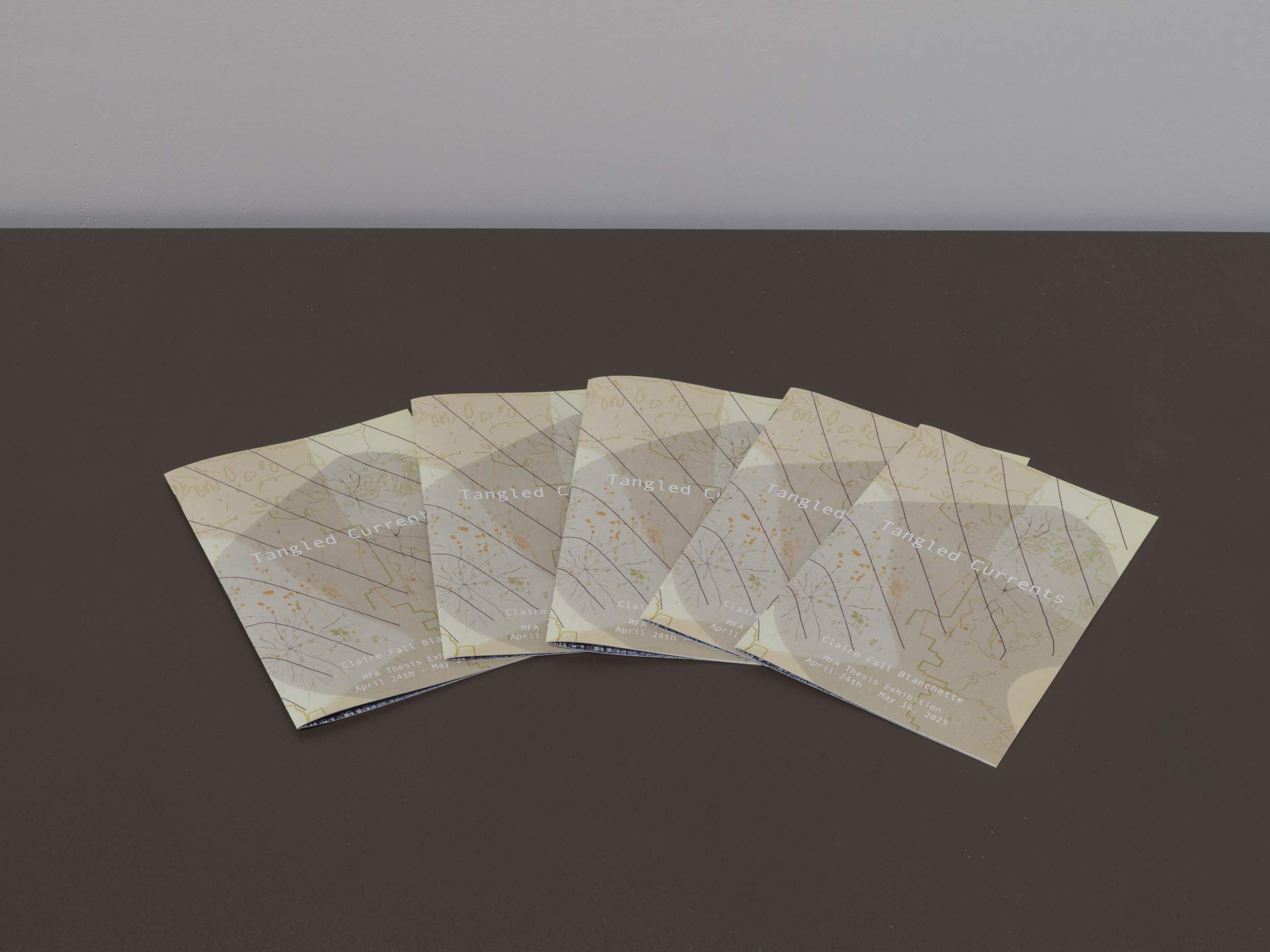
Tangled Currents
MFA Thesis Exhibition
Joseph Gross Gallery, University of Arizona, Tucson, AZ
April 23 - May 16, 2025
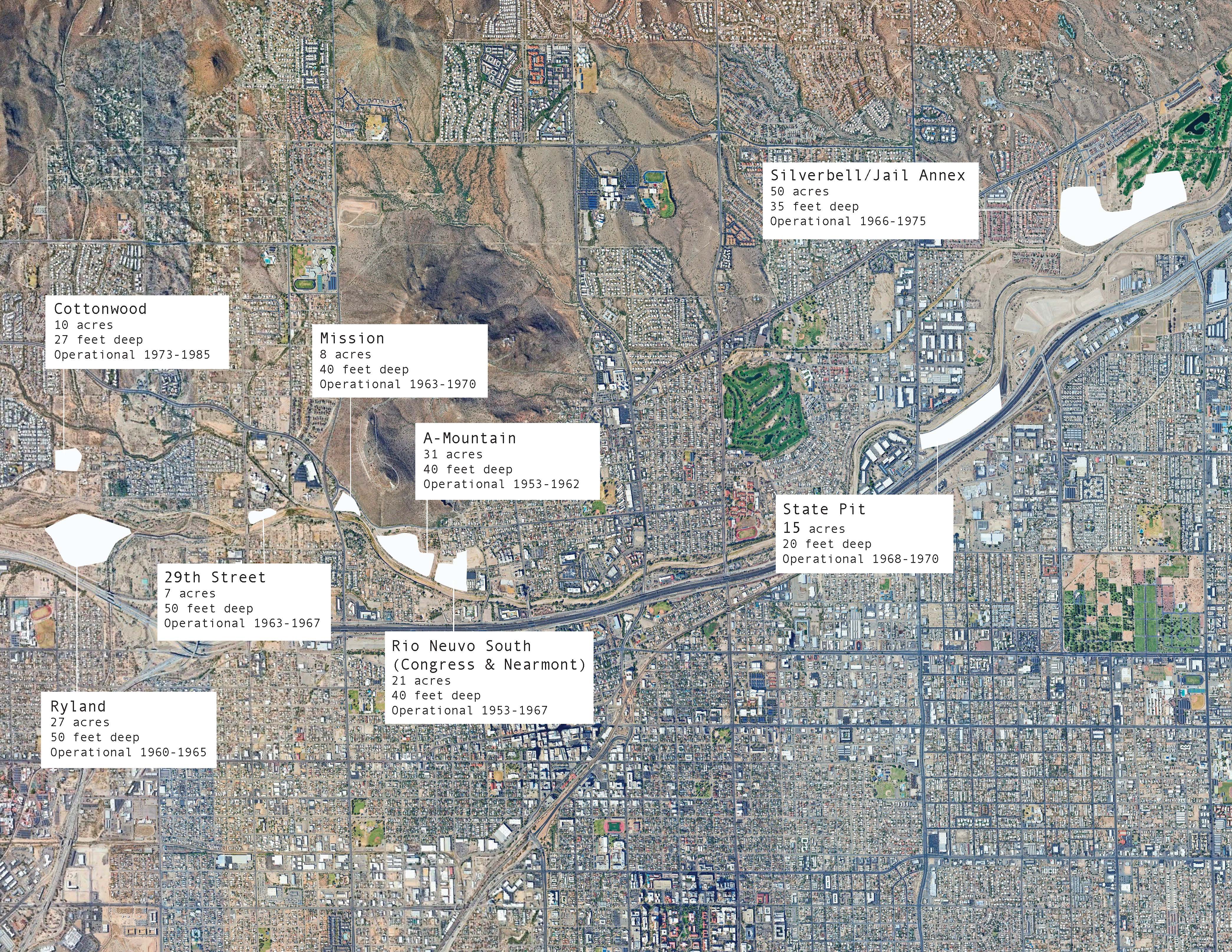
Tangled Currents uses eight historic landfills along the Santa Cruz River in Tucson as a framework to examine the sustained consequences of human activity on a local ecosystem. From the 1950s through the 1980s, the City of Tucson operated landfills directly along the banks of the Santa Cruz River. Filled in or built over, the landfills are hidden reminders of the relentless human impact on the environment, some even threatening to upend efforts to revitalize the river.
Each of the sculptures in Tangled Currents represents one of these sites and offers a speculative solution for their remediation. Arranged in a loose map, the forms are scaled to represent the shape and depth of the respective landfills. Reishi fruiting bodies (Ganoderma lucidum) twist and bend from each of the sculpture’s sections. Like a web of roots, the mushrooms make visible the unseen network binding the sculptures together.
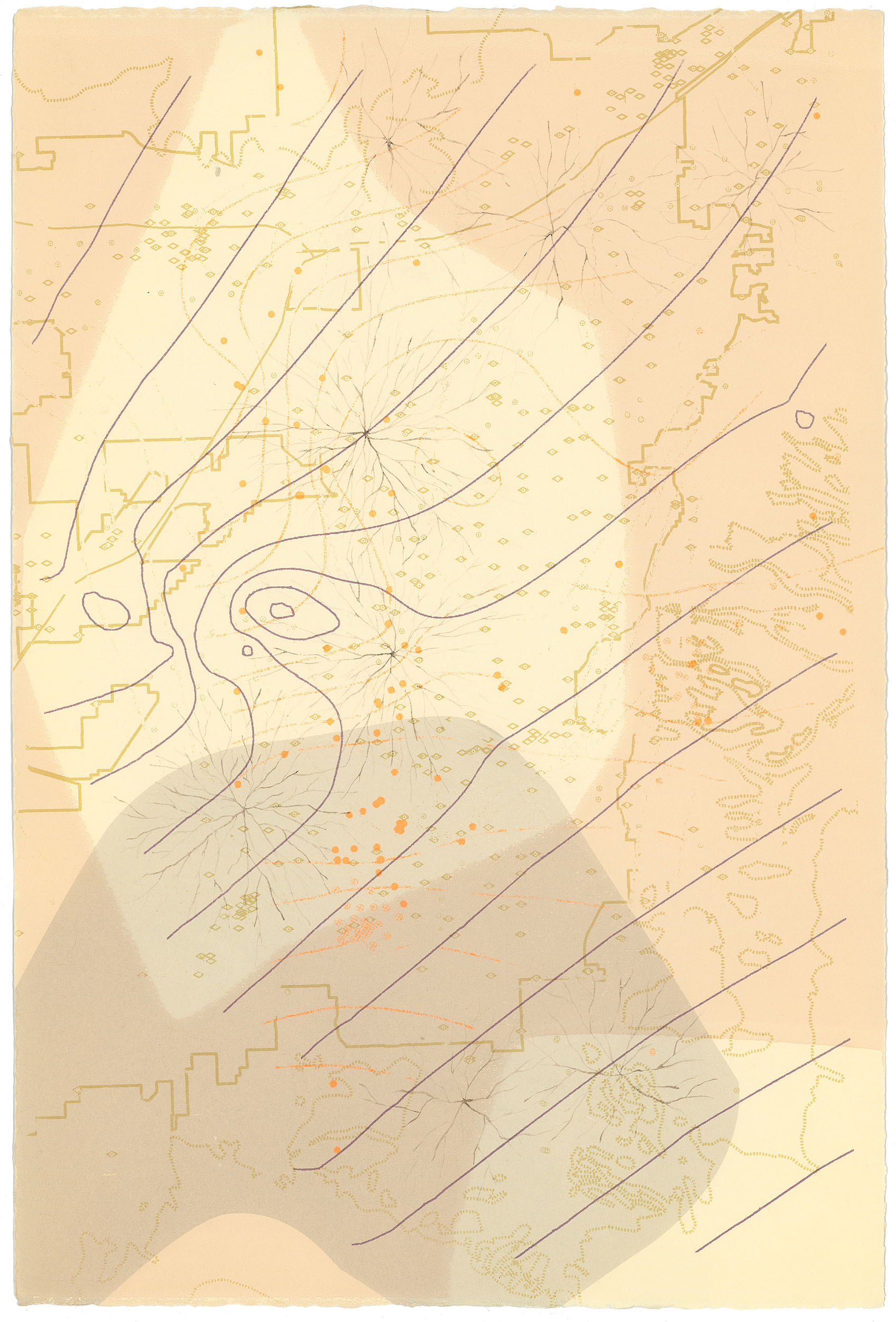
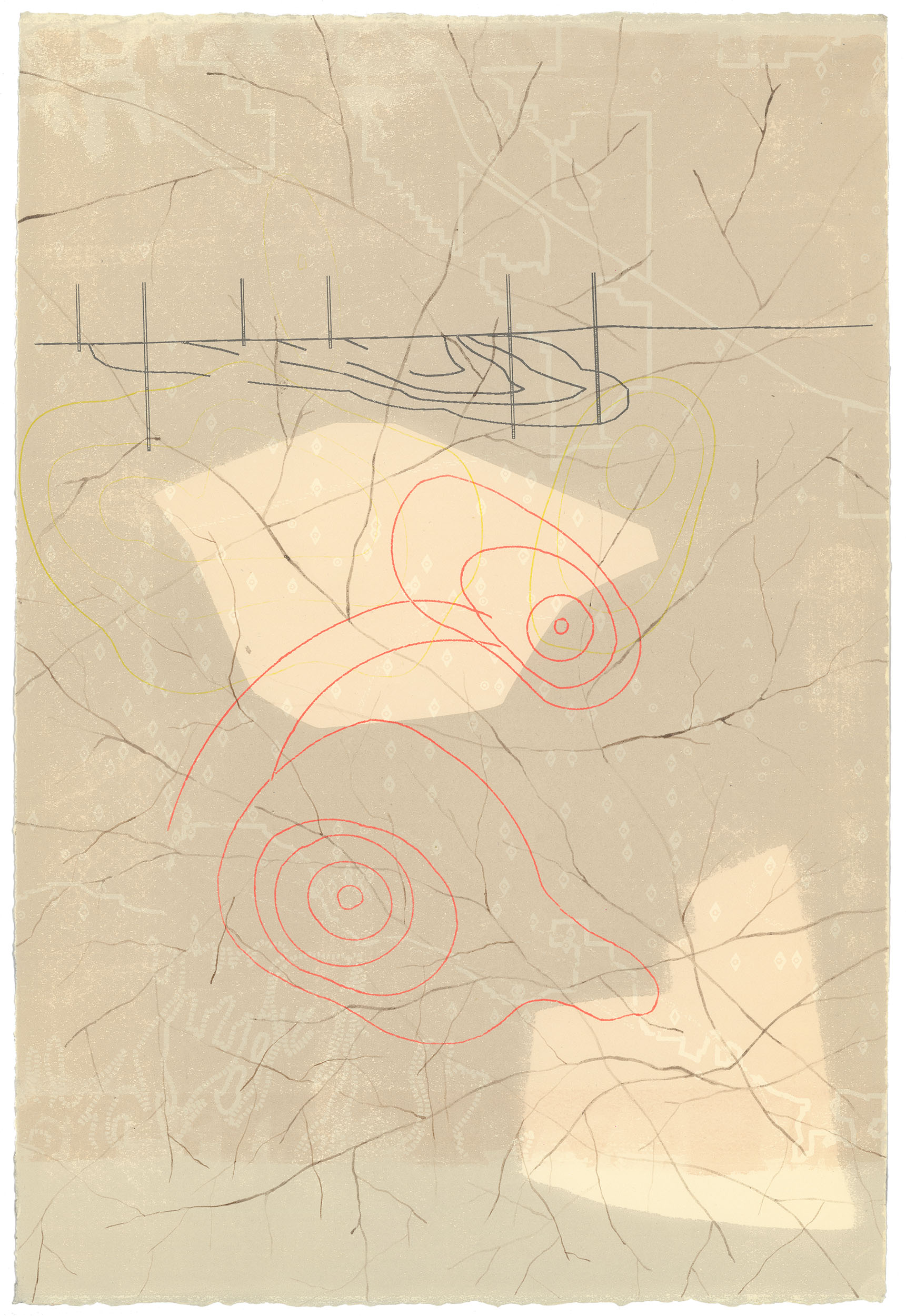
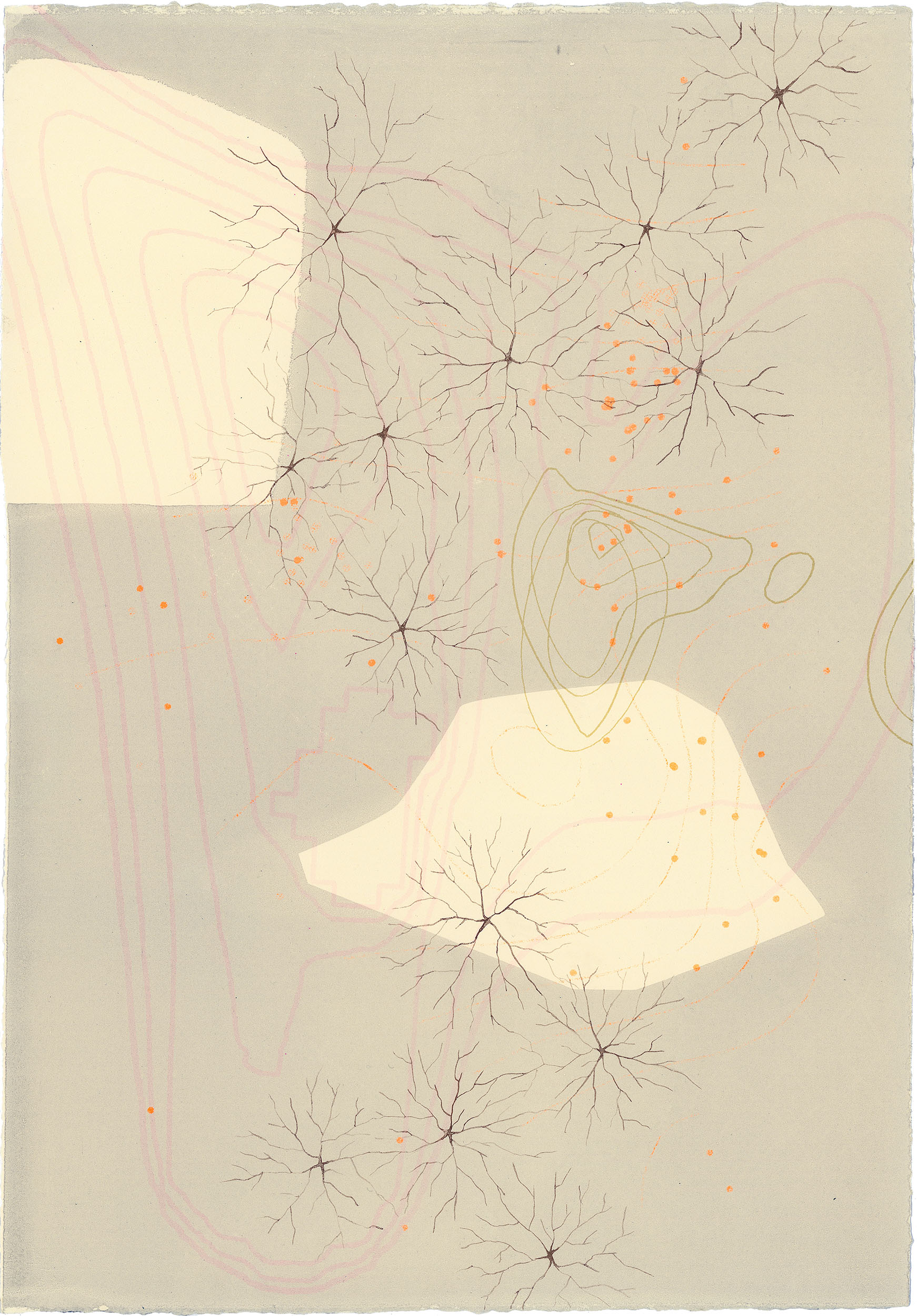
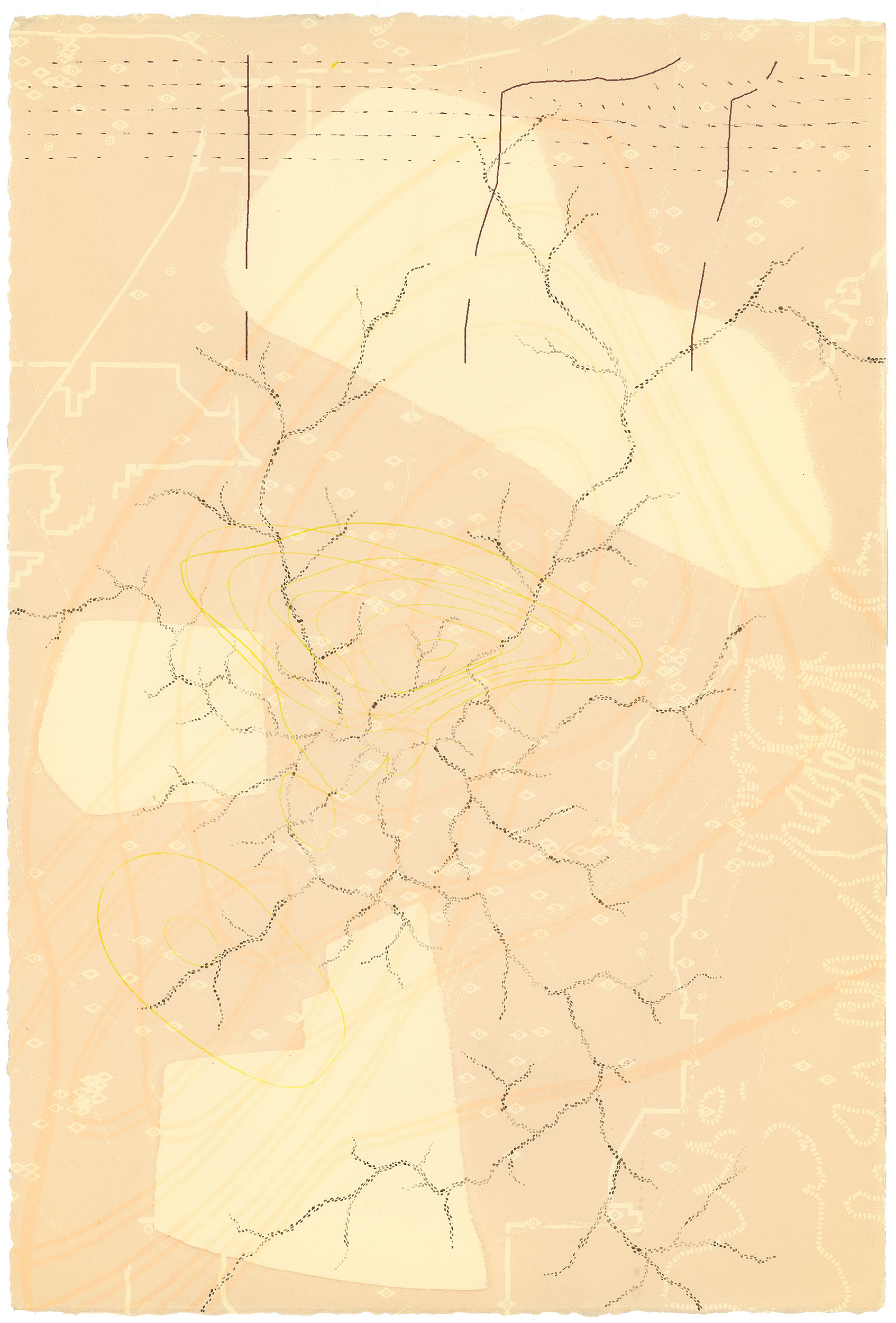
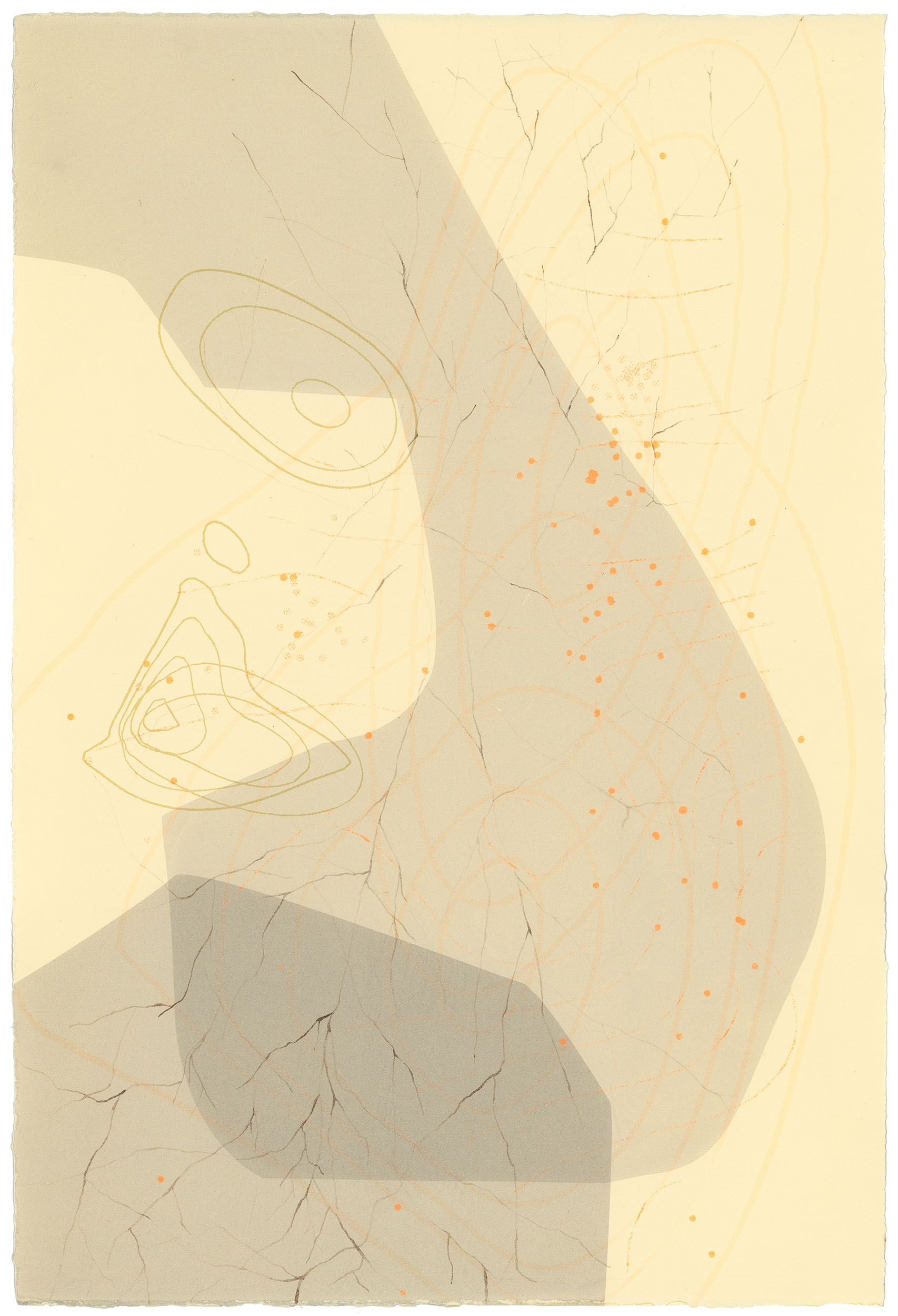
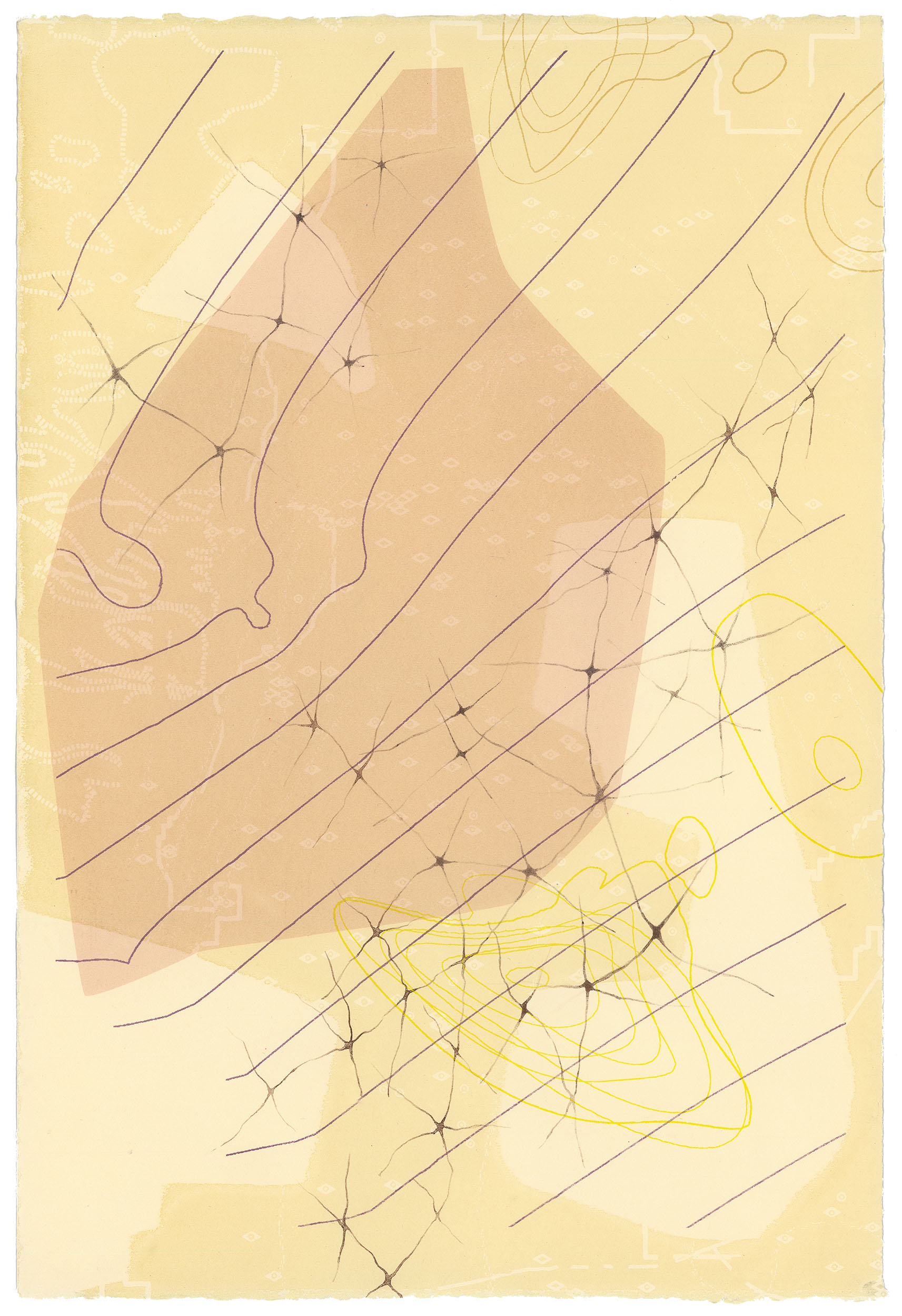
Eight drawings accompany the sculptures and pull from various sources related to the monitoring of landfills, including maps, contamination prediction models, and scientific diagrams. Layered within are hand-drawn interpretations of the microscopic mycelial systems painted with collected reishi spores. The abstracted marks oscillate between the micro and the macro to encompass the complexities of human and non-human relationships, creating an opportunity to reflect on our implicit participation in both.
Reishi fungal networks can clean toxins from soil and water through mycoremediation. As one member in a greater ecosystem, mycelium secretes enzymes that can break down toxins and plant matter, helping revitalize the soil and make space for new life. Mycelium has evolved reciprocal relationships with other organisms to increase their collective chance of survival, in contrast to humans, who have created stark separations between ourselves and the natural world. Mycelium’s inherent processes unveil alternative ways of existence that move away from the anthropogenic perspective.
Tangled Currents presents human-nonhuman partnerships as a way toward a more sustainable and symbiotic future. It suggests an alternative to human-centered ways of thinking by examining natural processes for guidance in developing a mutually beneficial world.


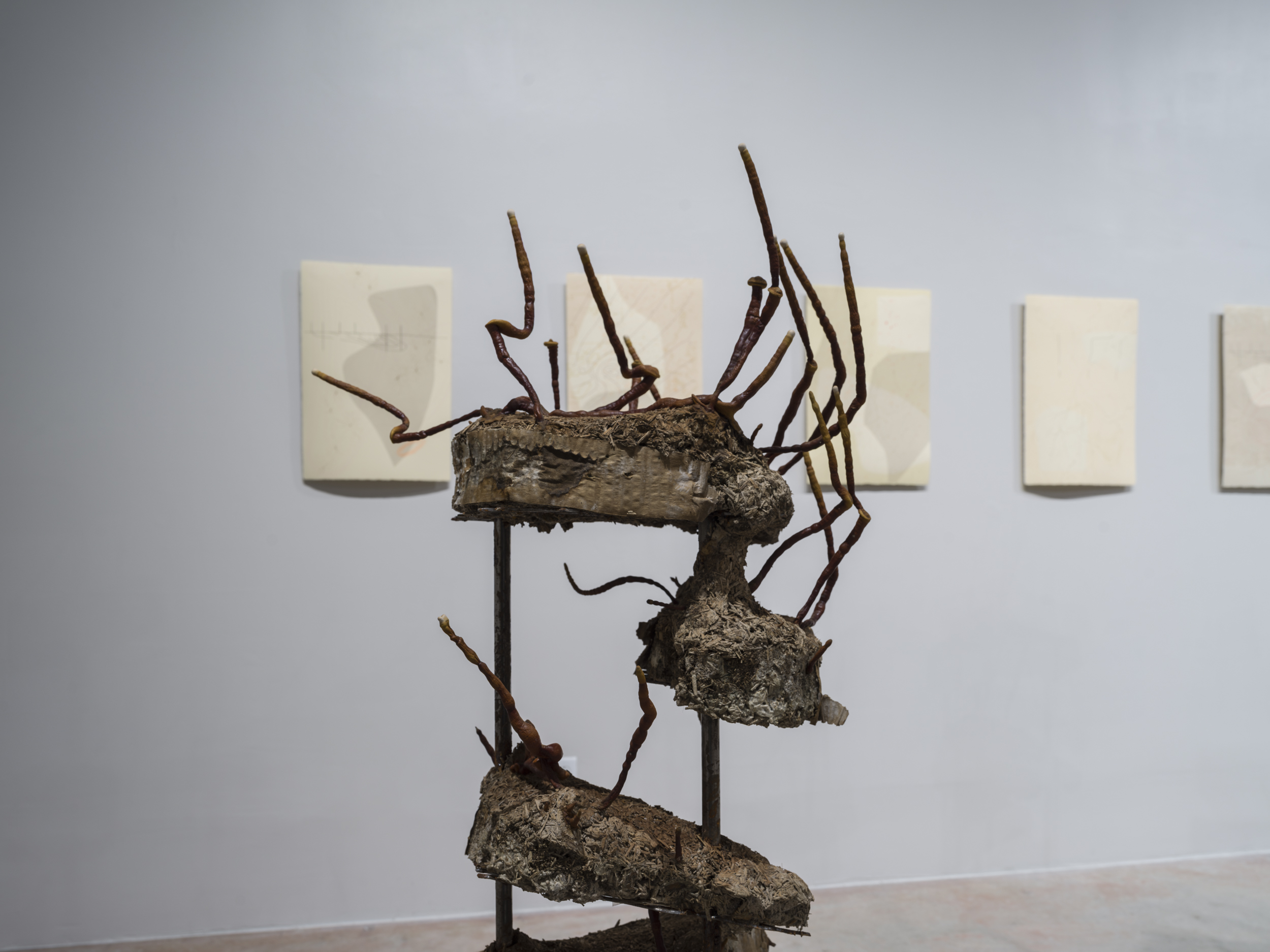
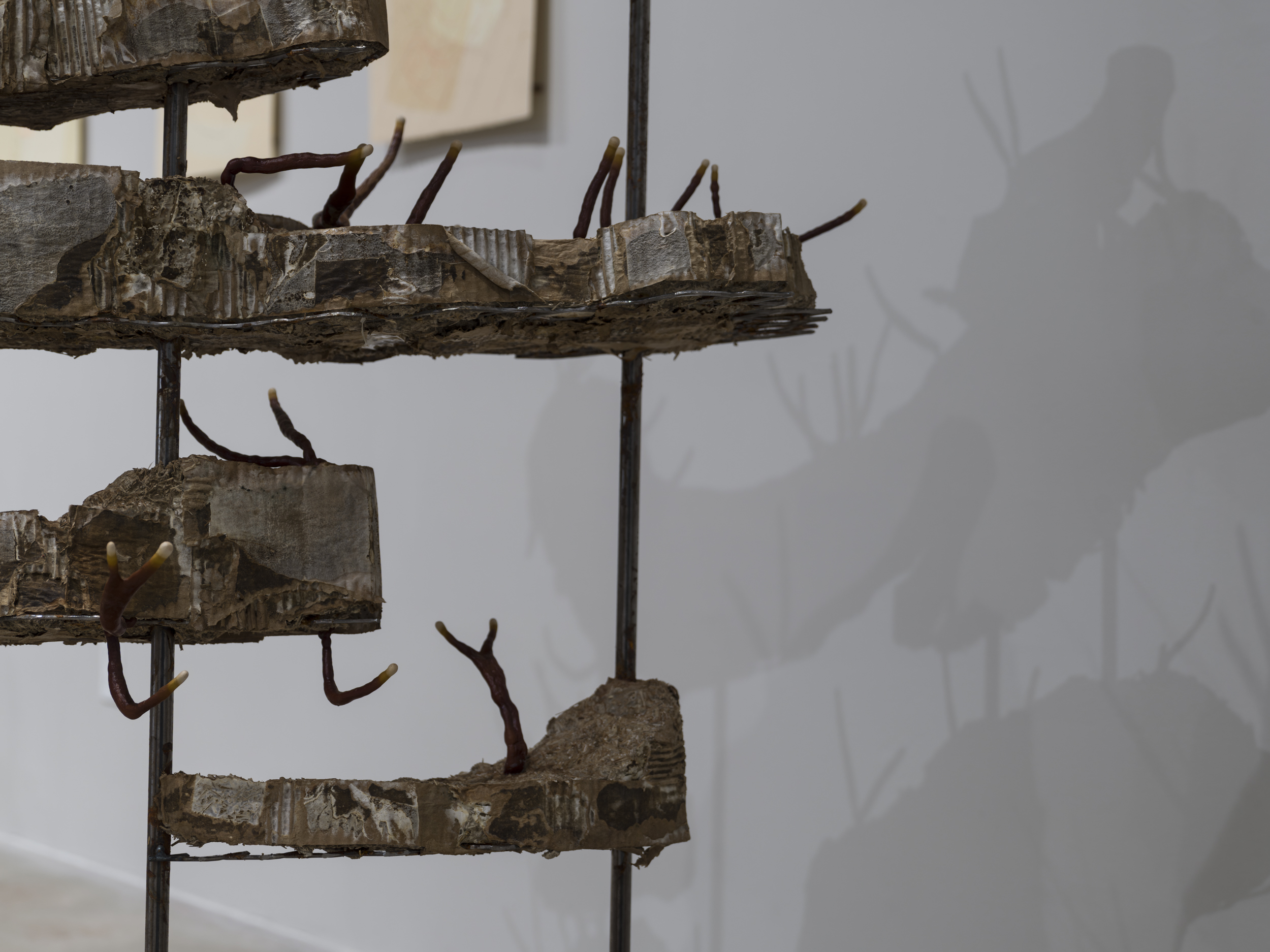
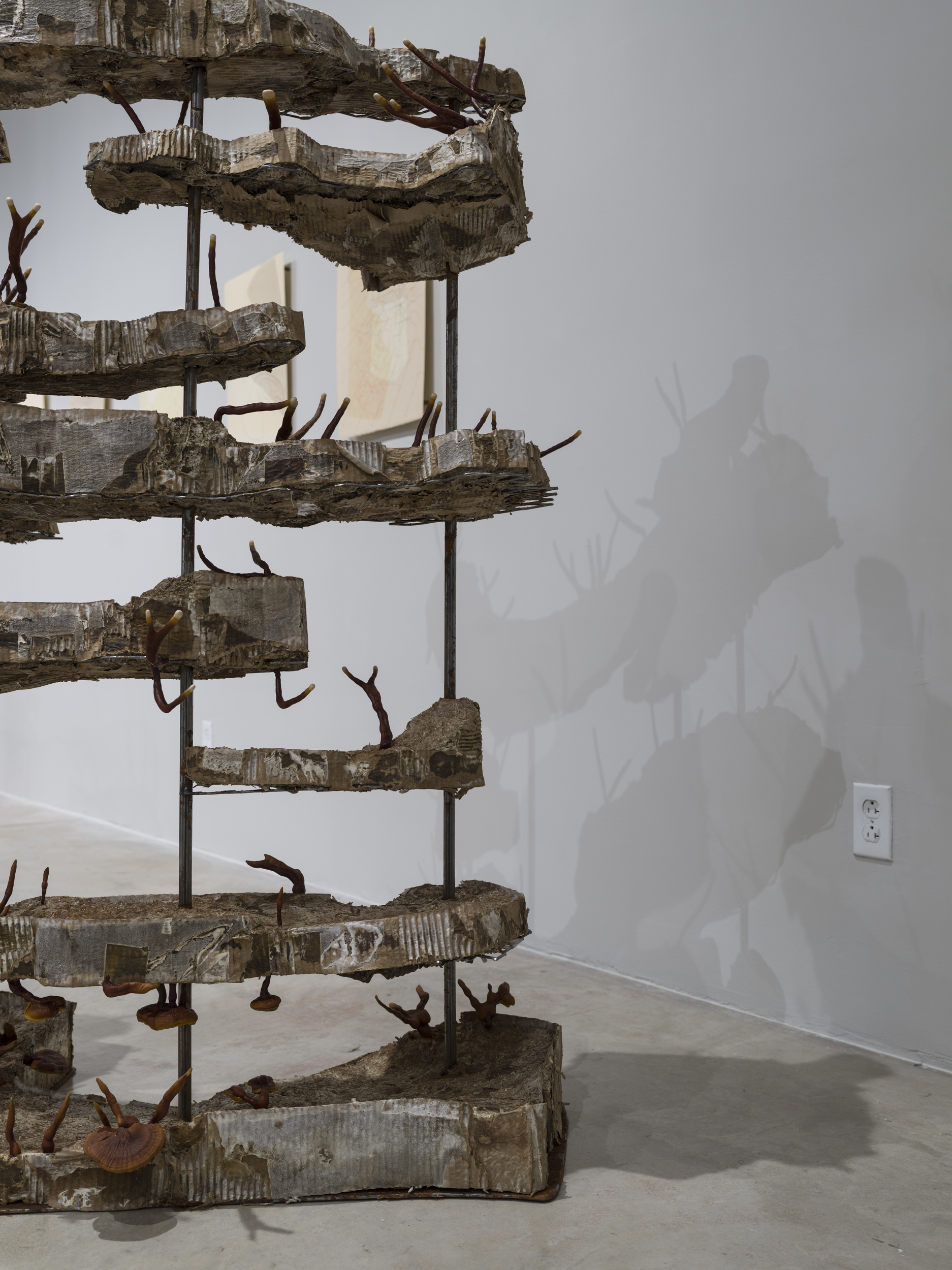


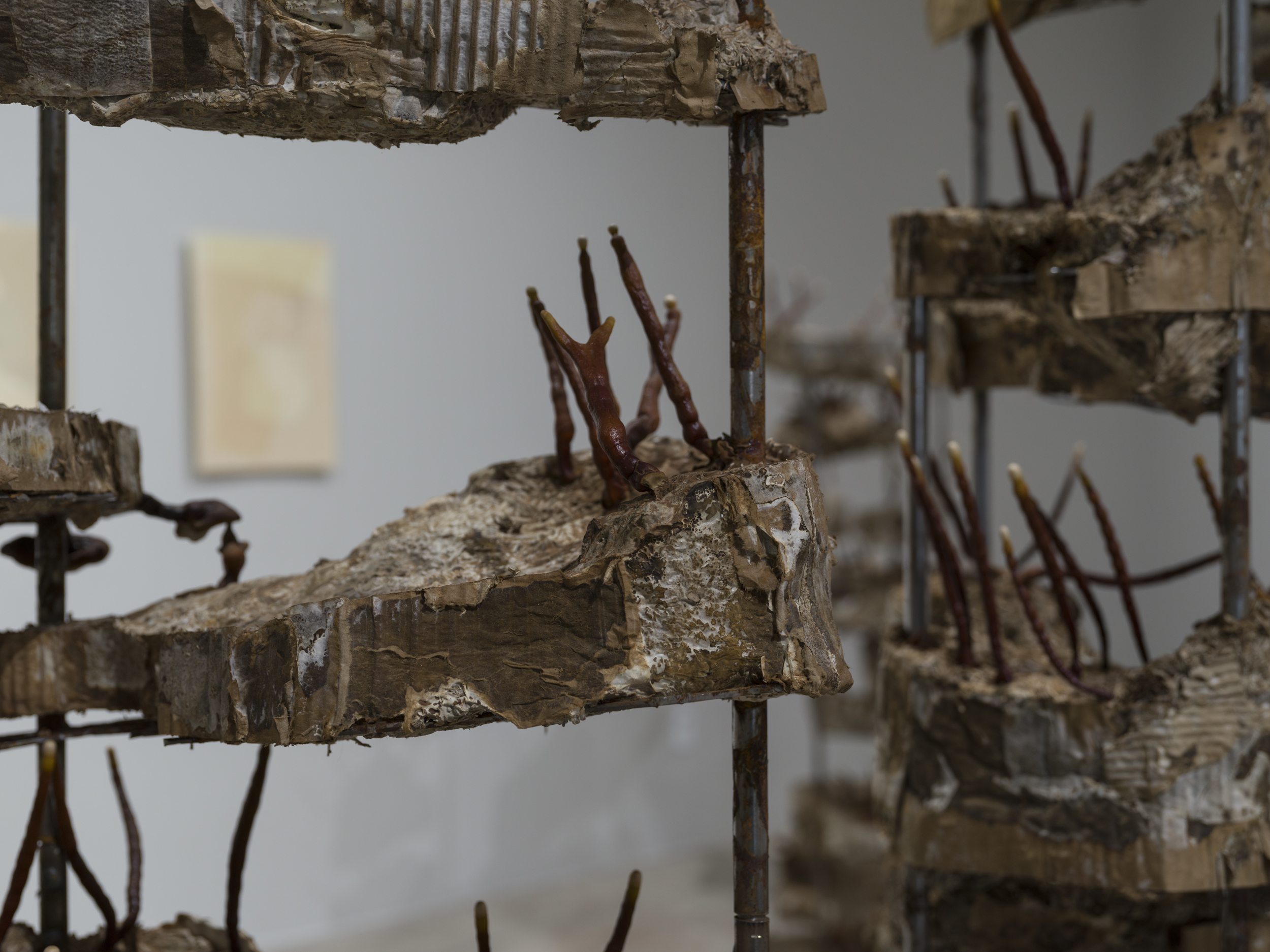
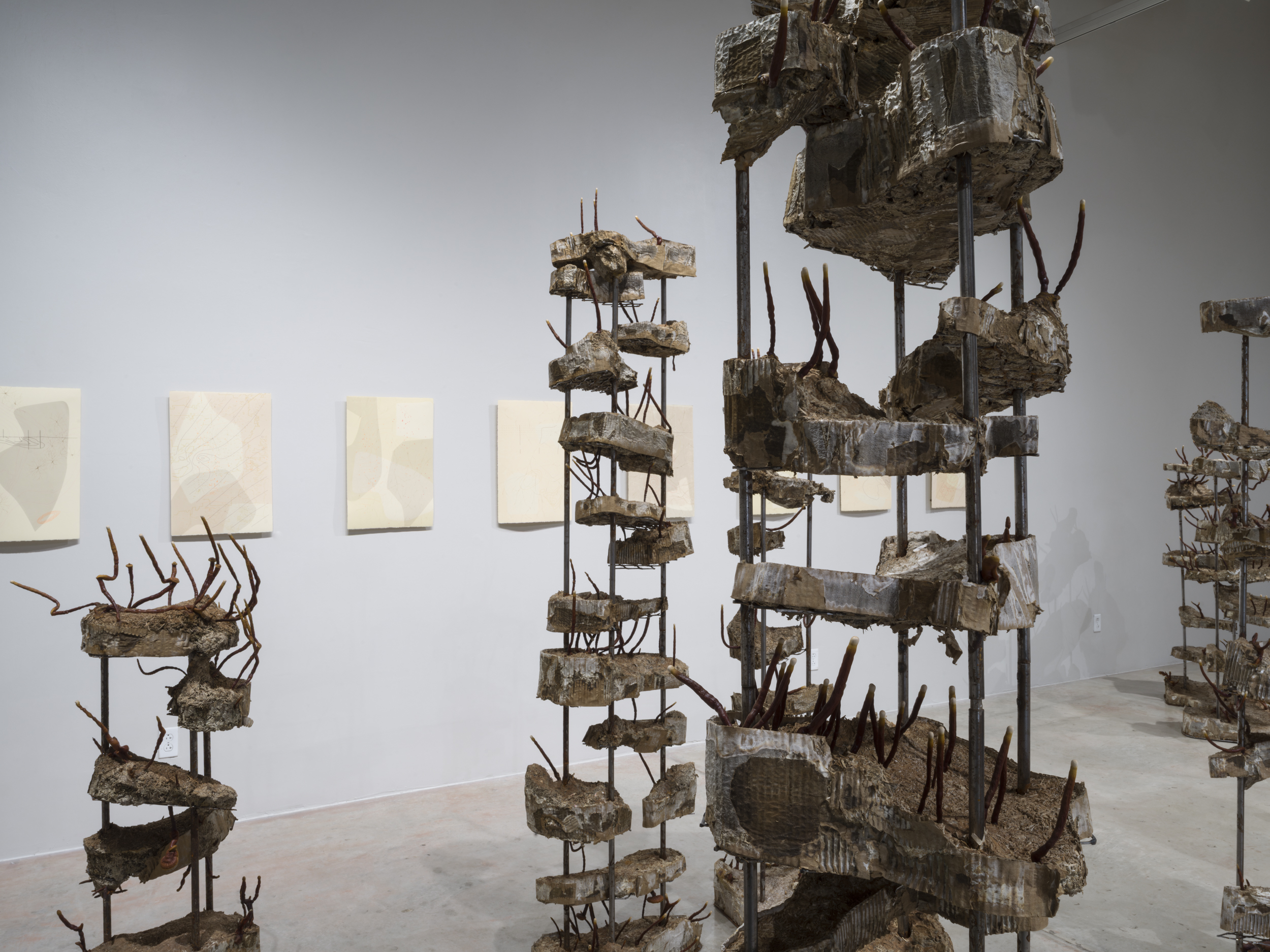

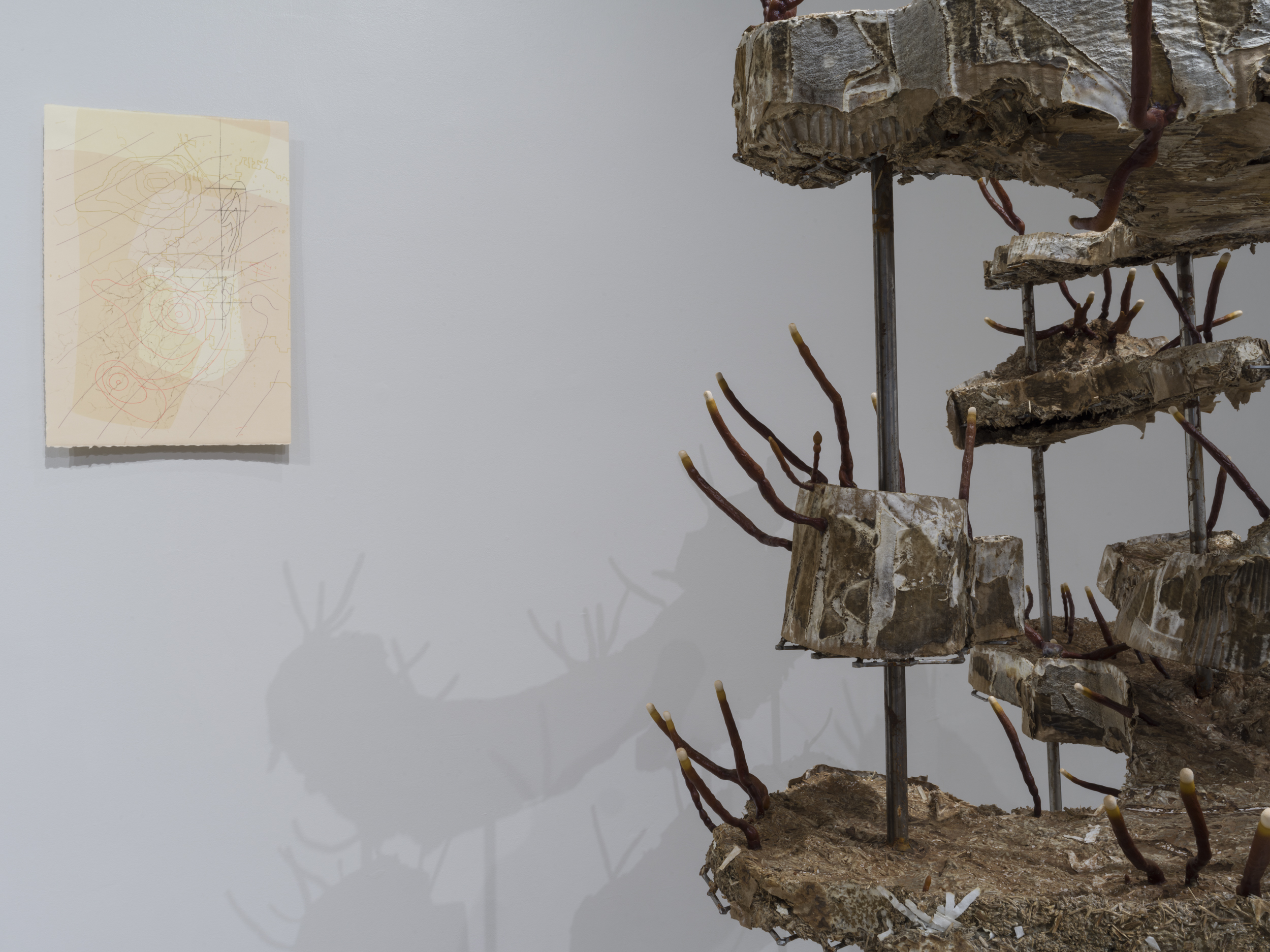
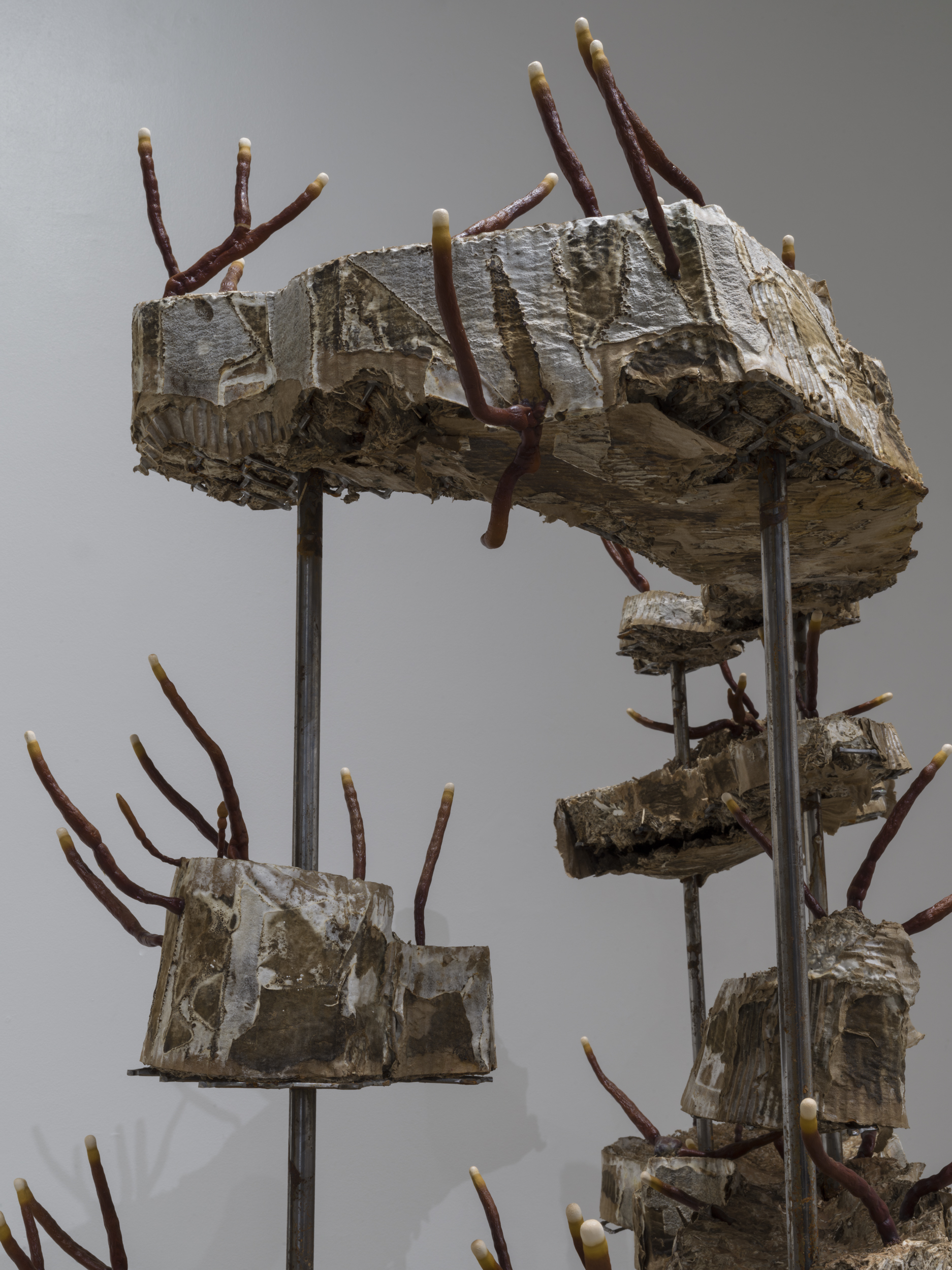

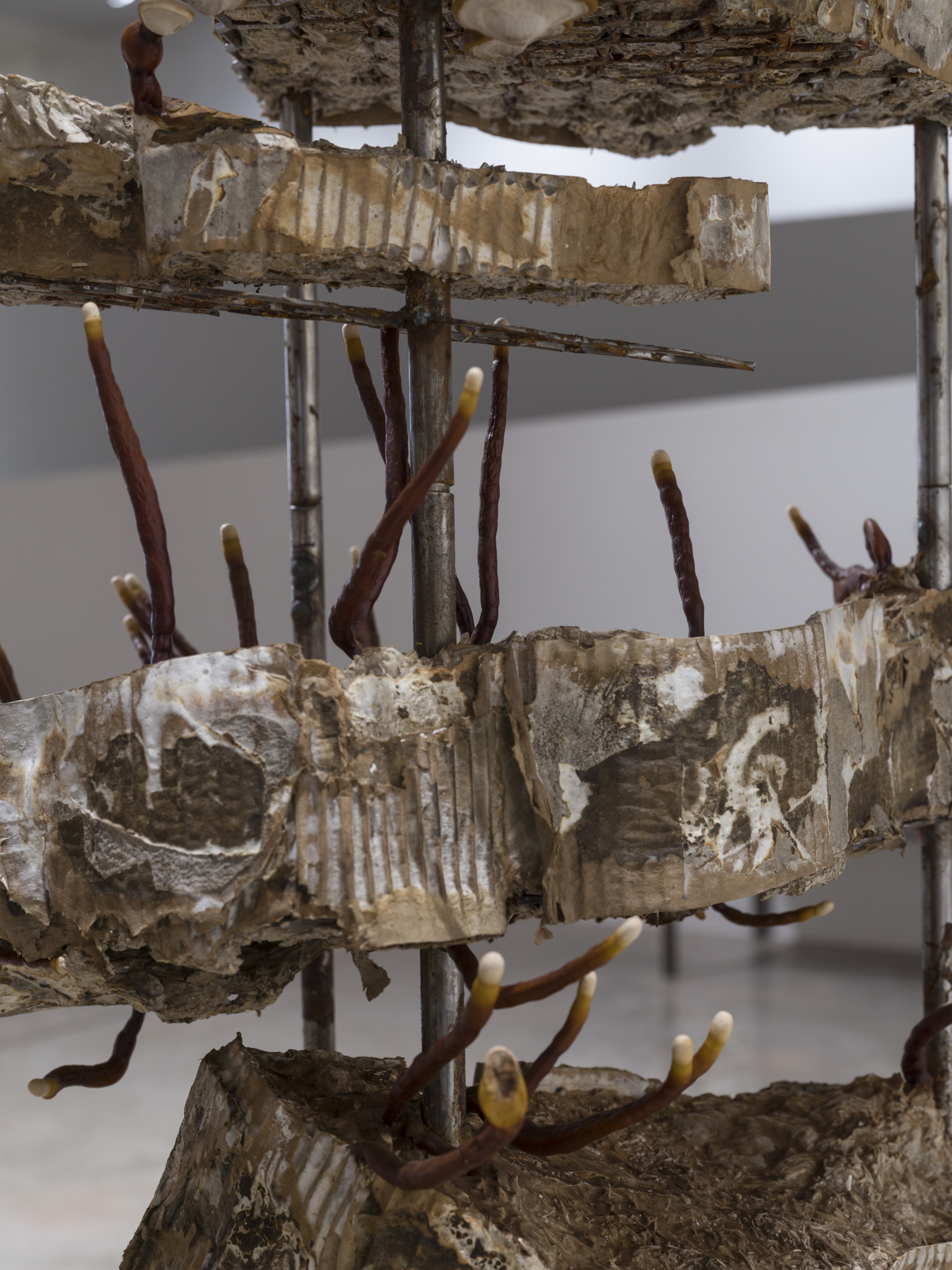
Tangled Currents
2025
Reishi mycelium, hemp hurd, hardwood shavings, clay, cardboard, paper, xanthan gum, & steel
20’ x 8.5’ x 7’
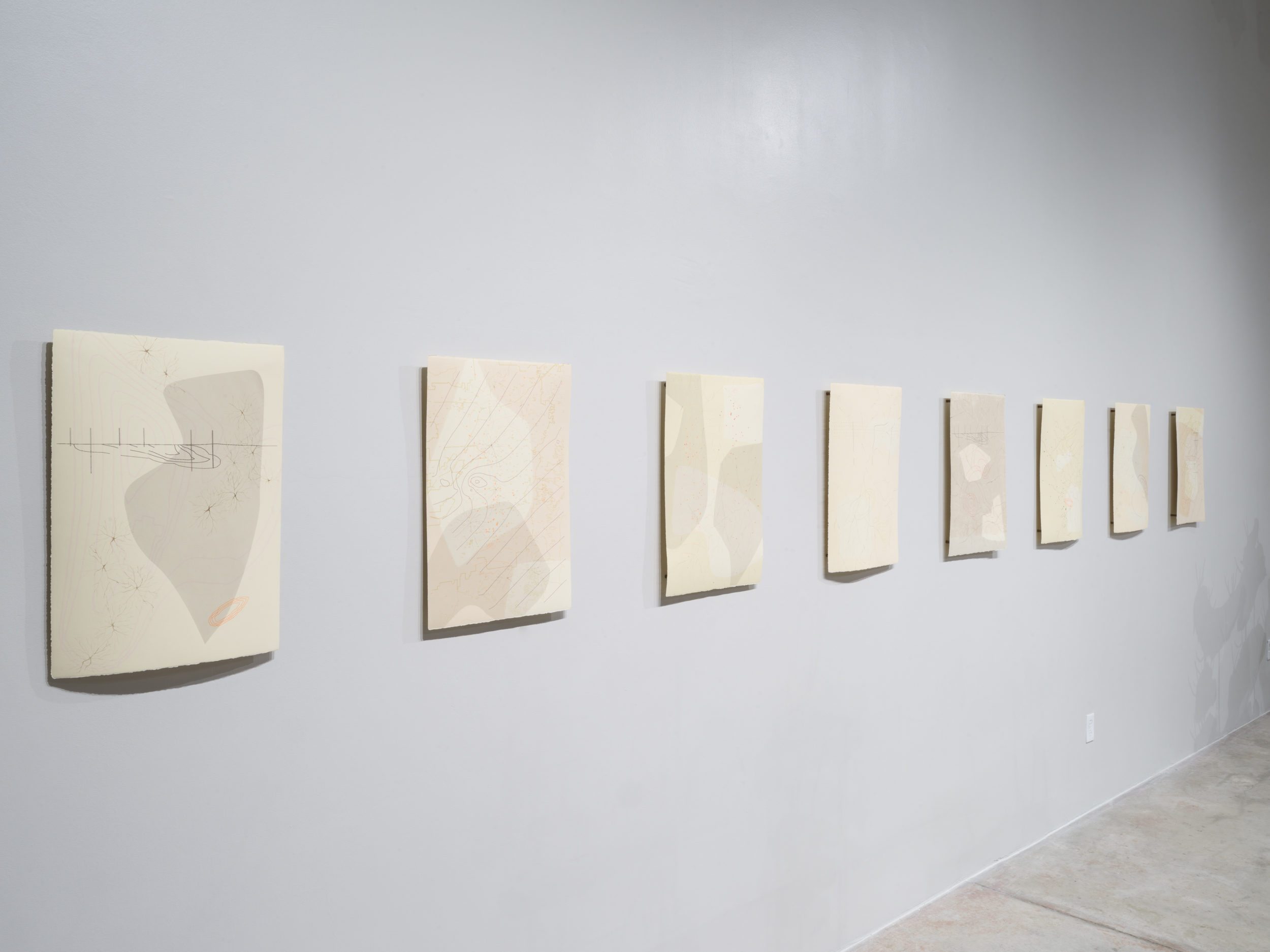
Reclamare I-VIII
2025
Screen print and reishi spores on Rives BFK
15” x 22” each






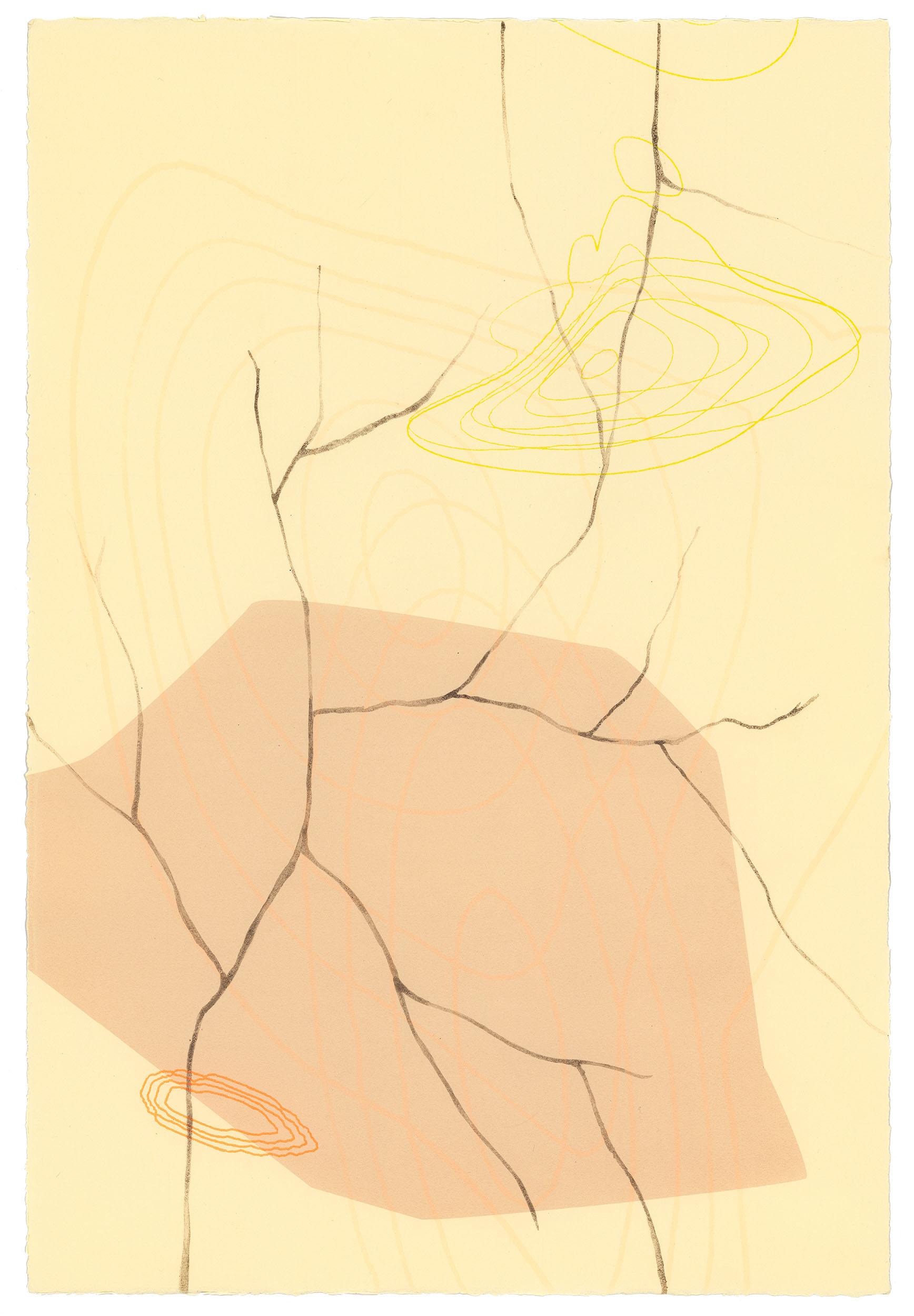
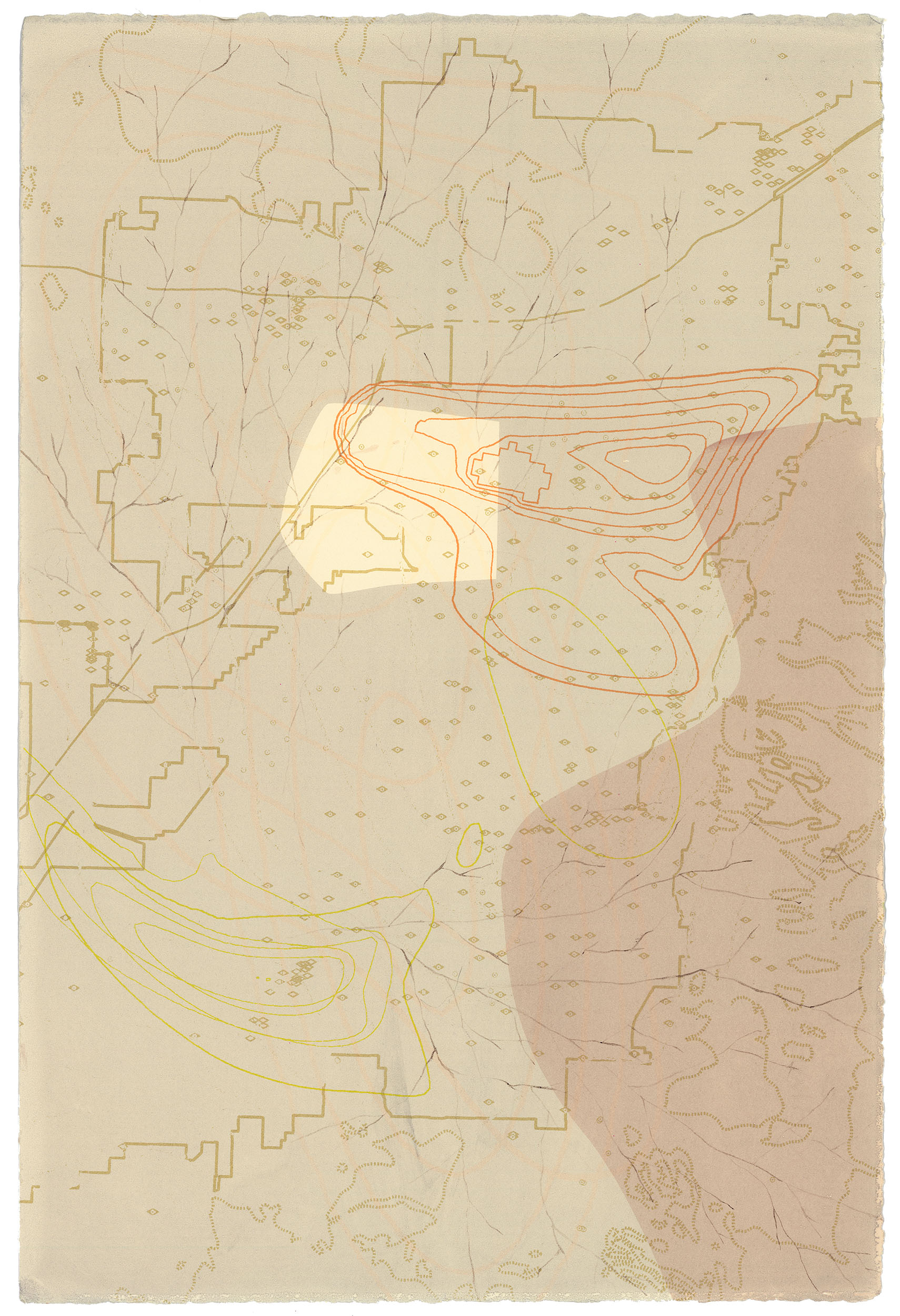
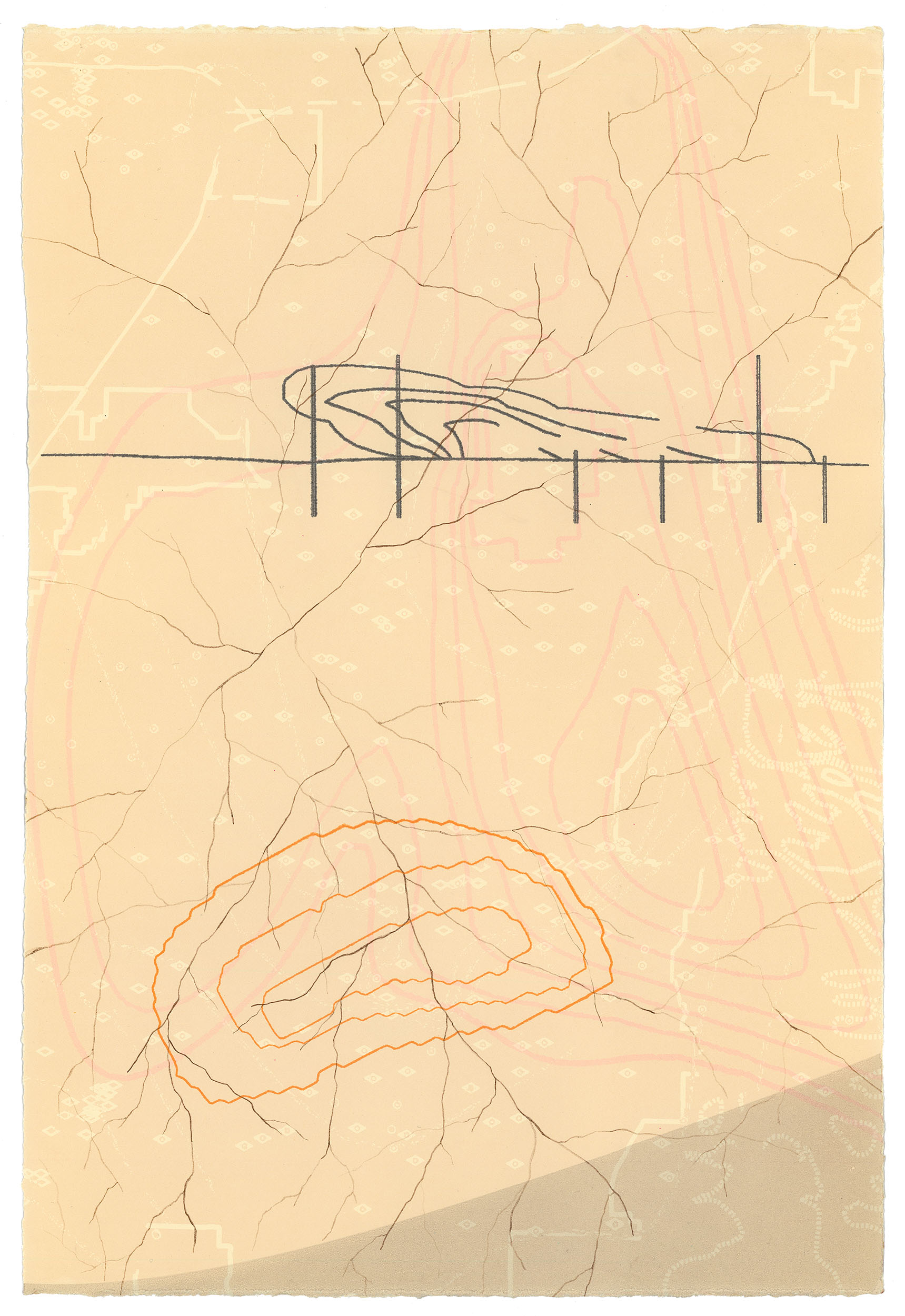


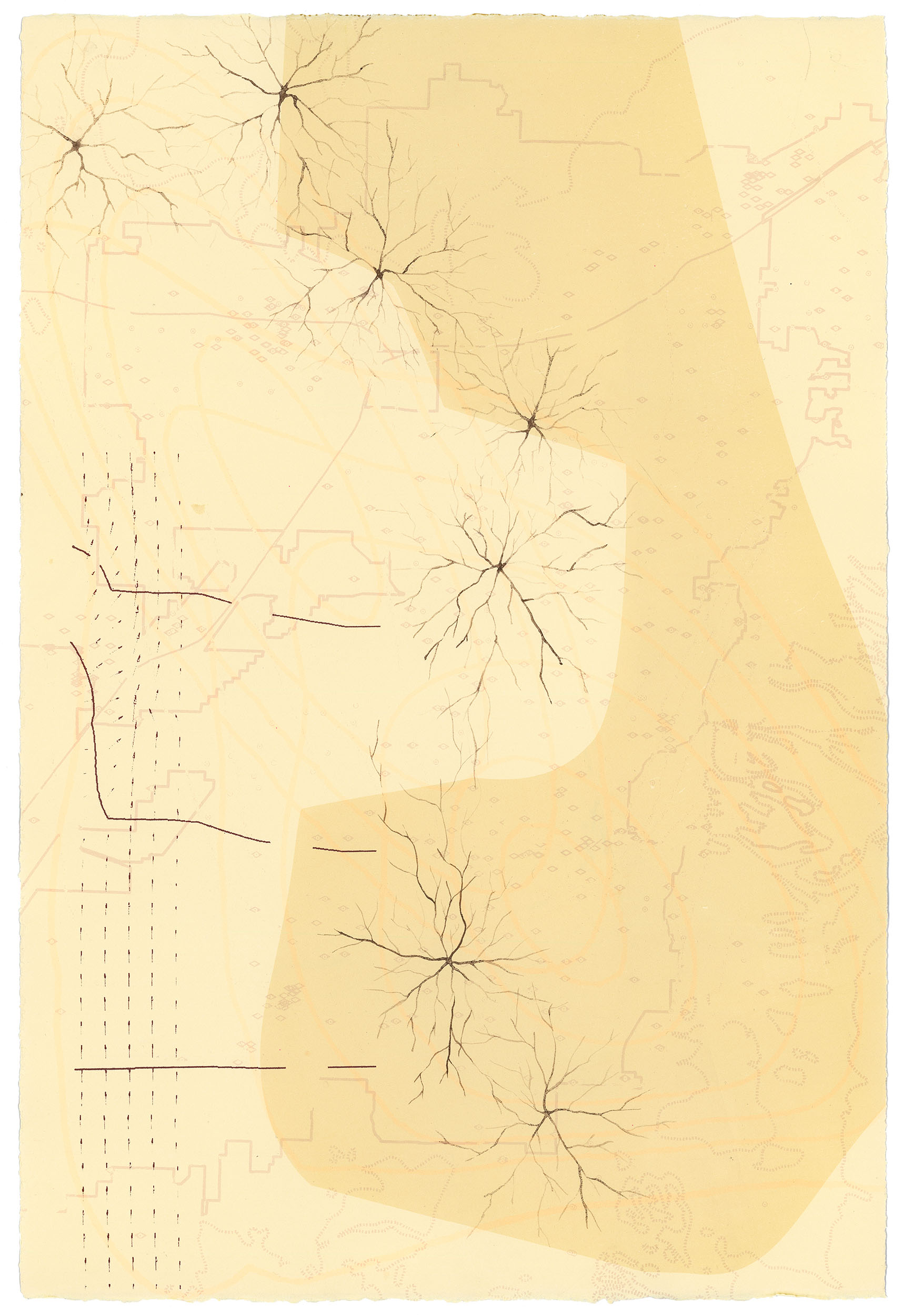
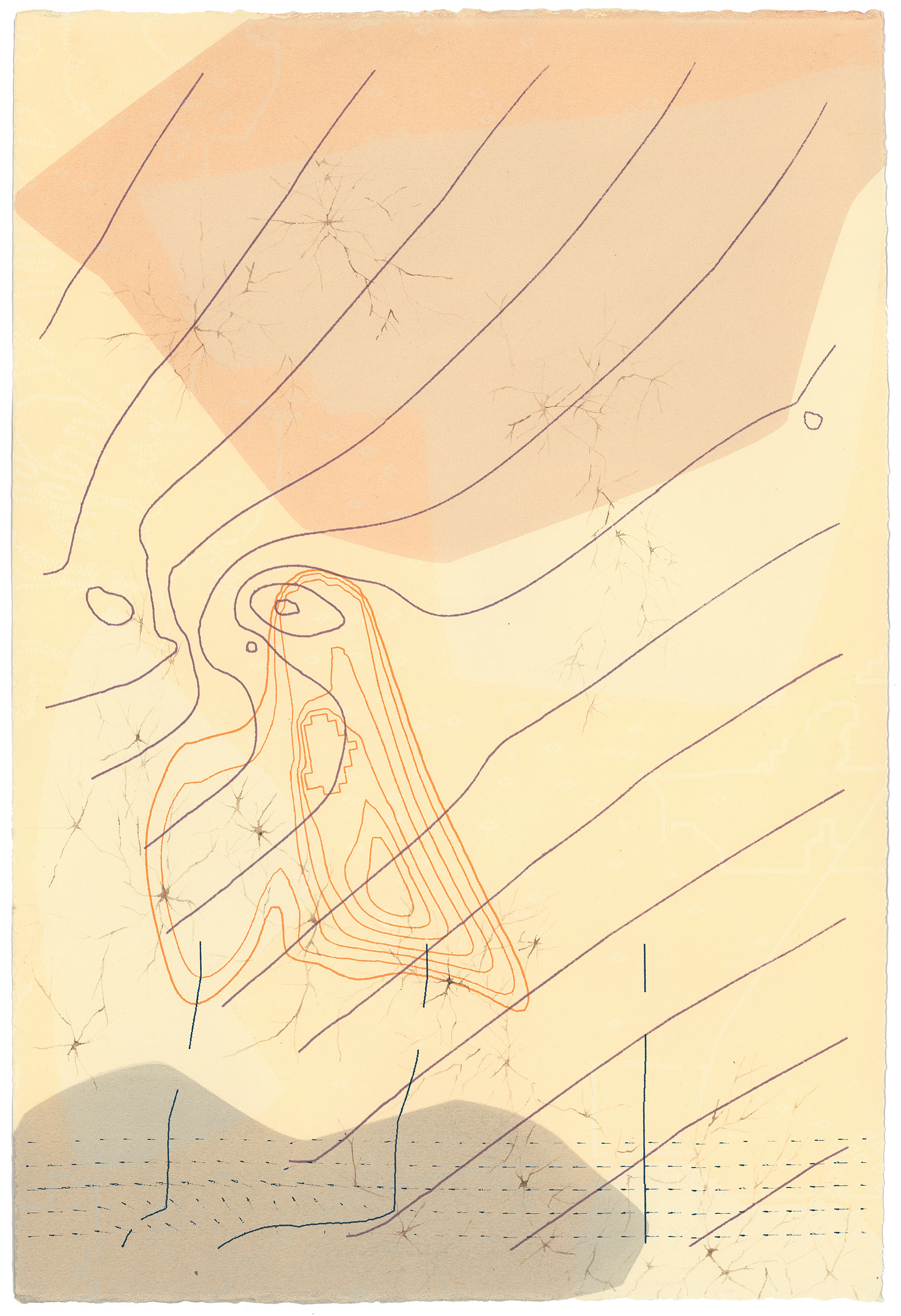


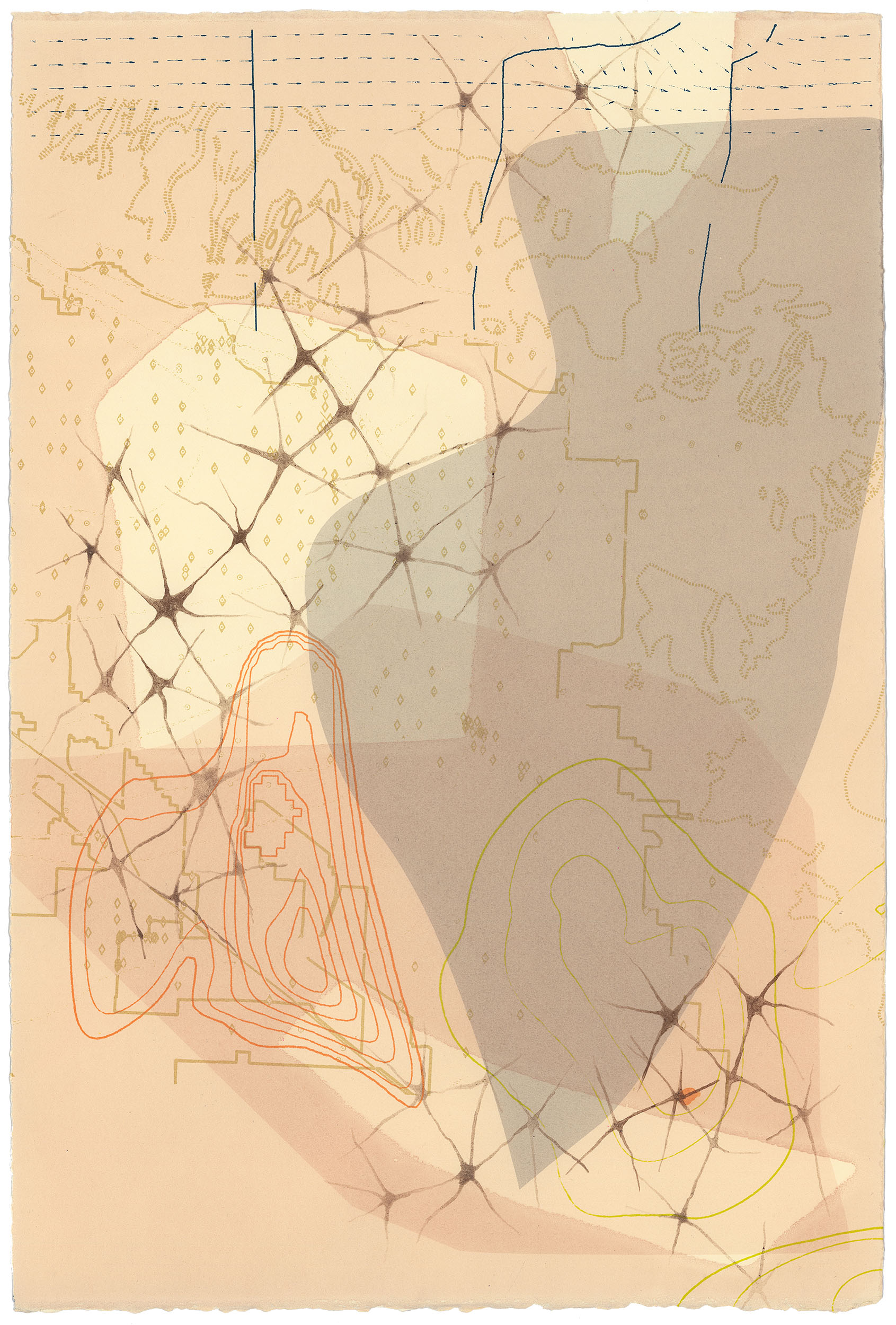
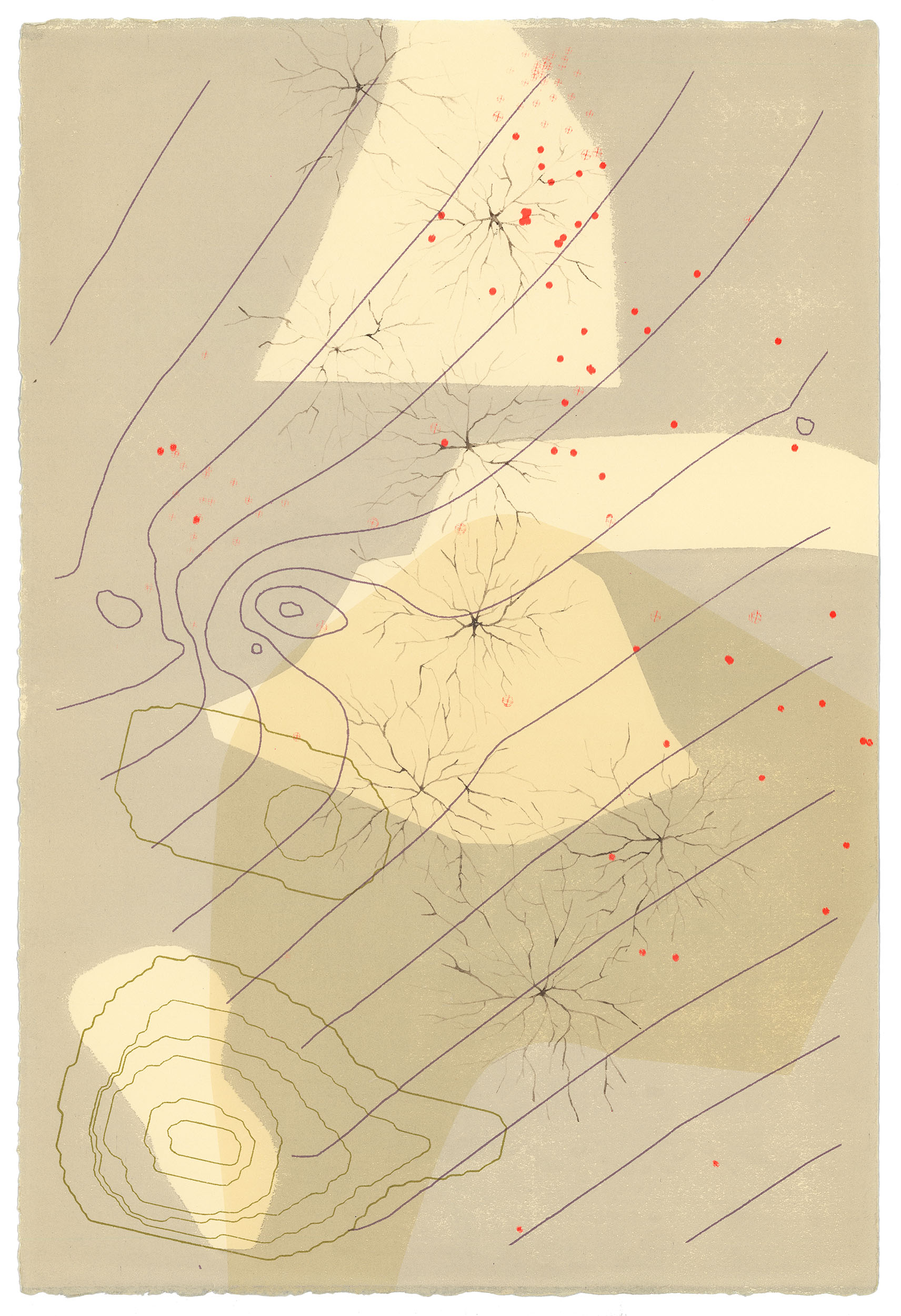
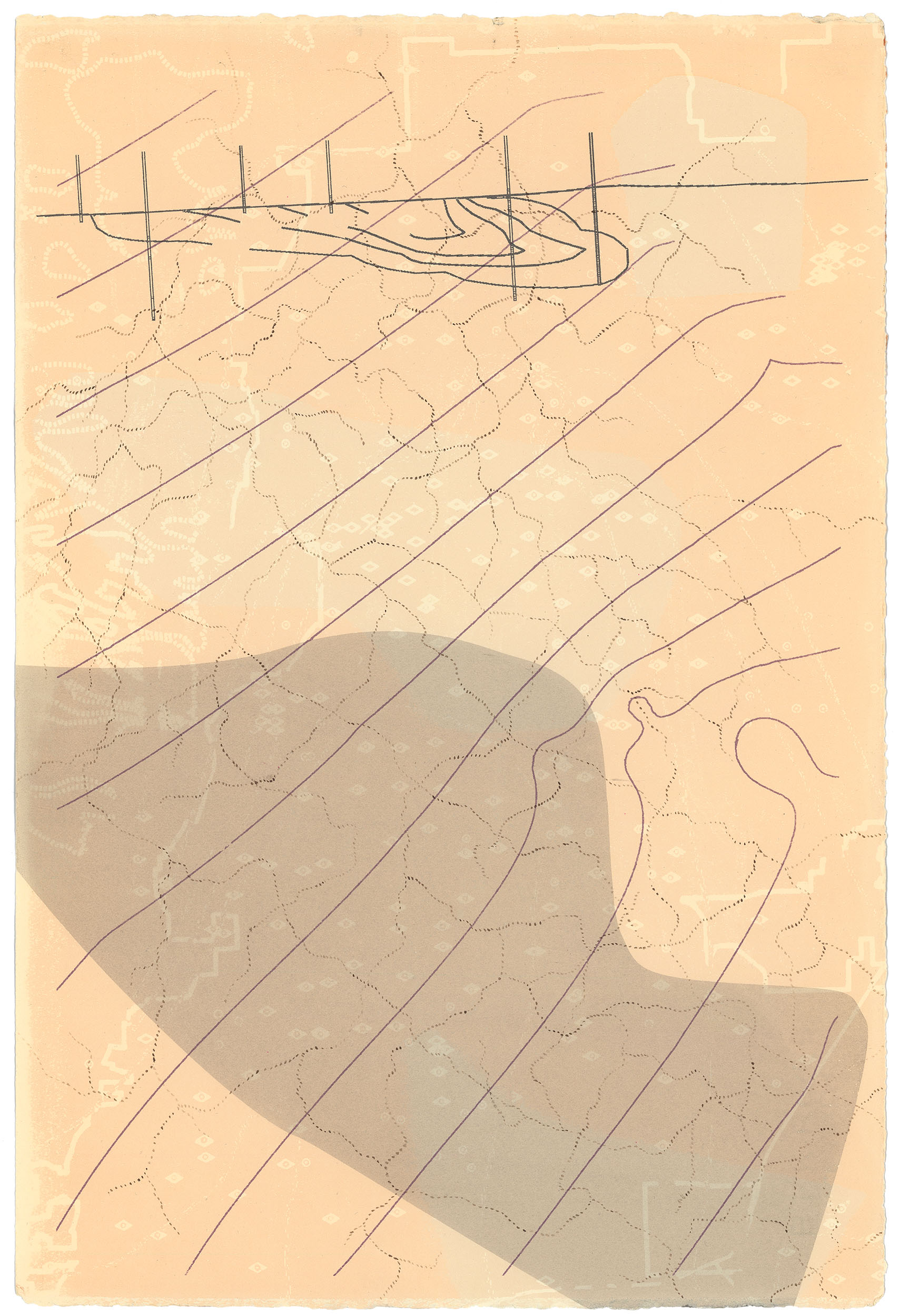

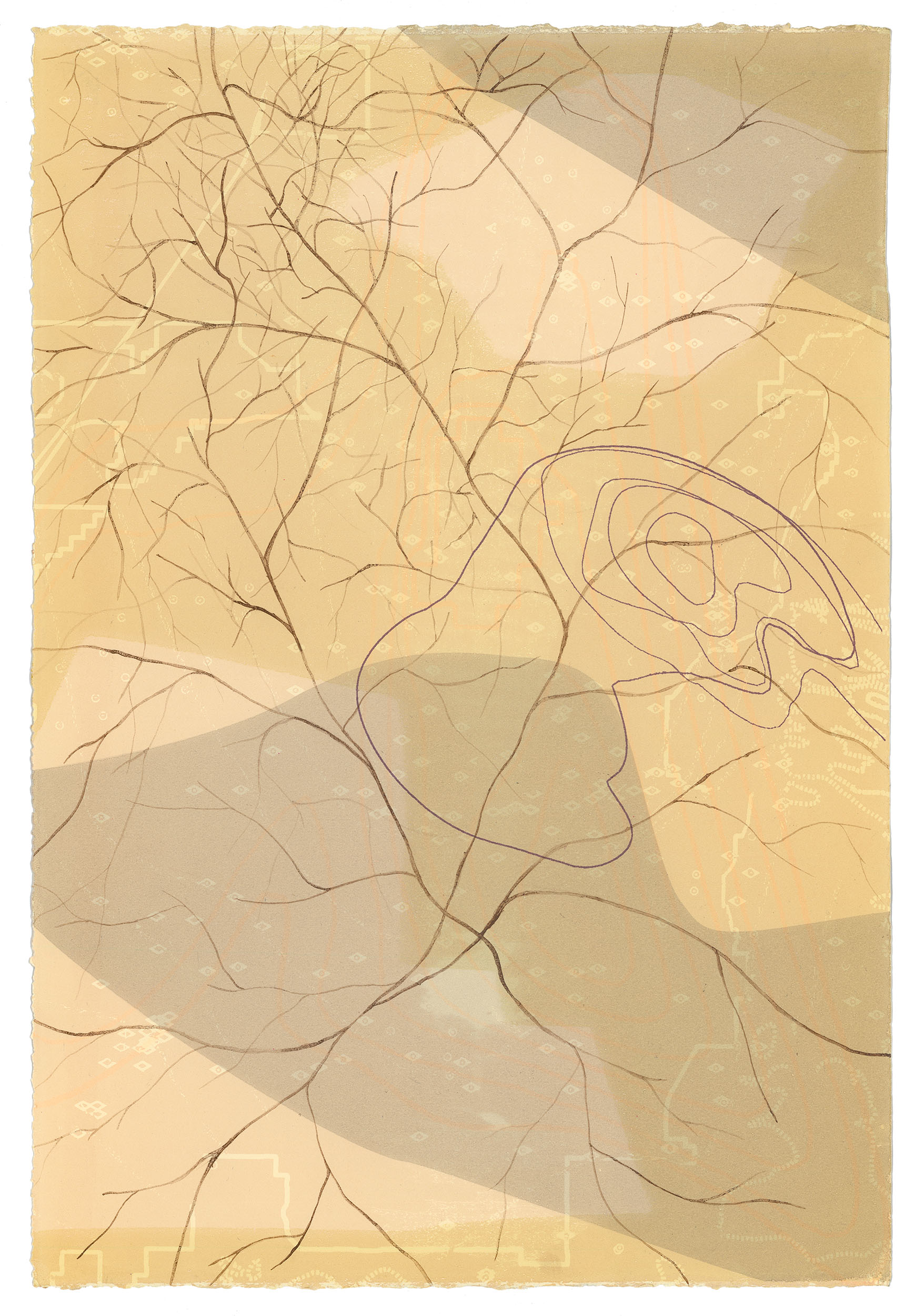
Reclamare I-XXVIII
2025
Screen print and reishi spores on Rives BFK
15” x 22” each
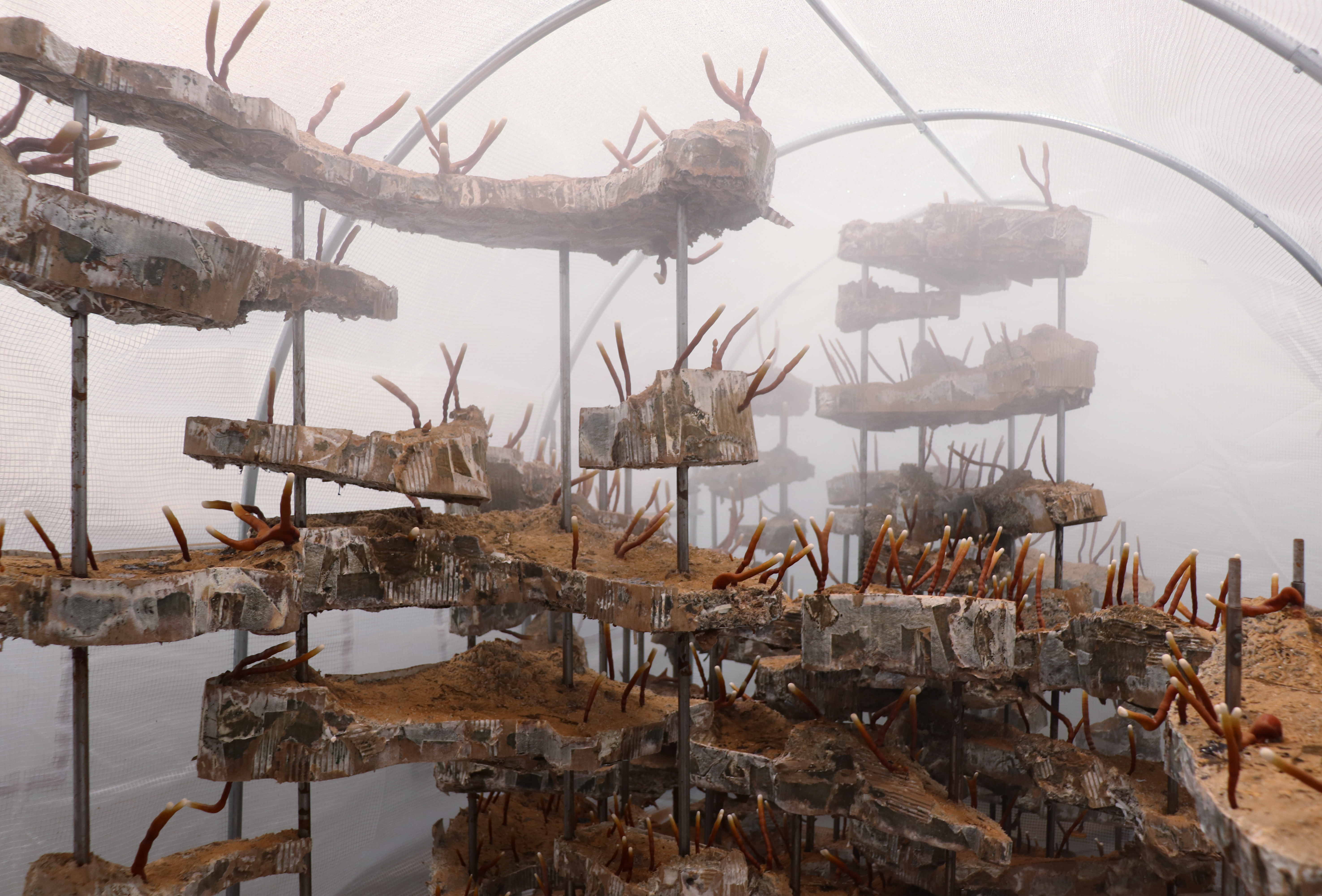
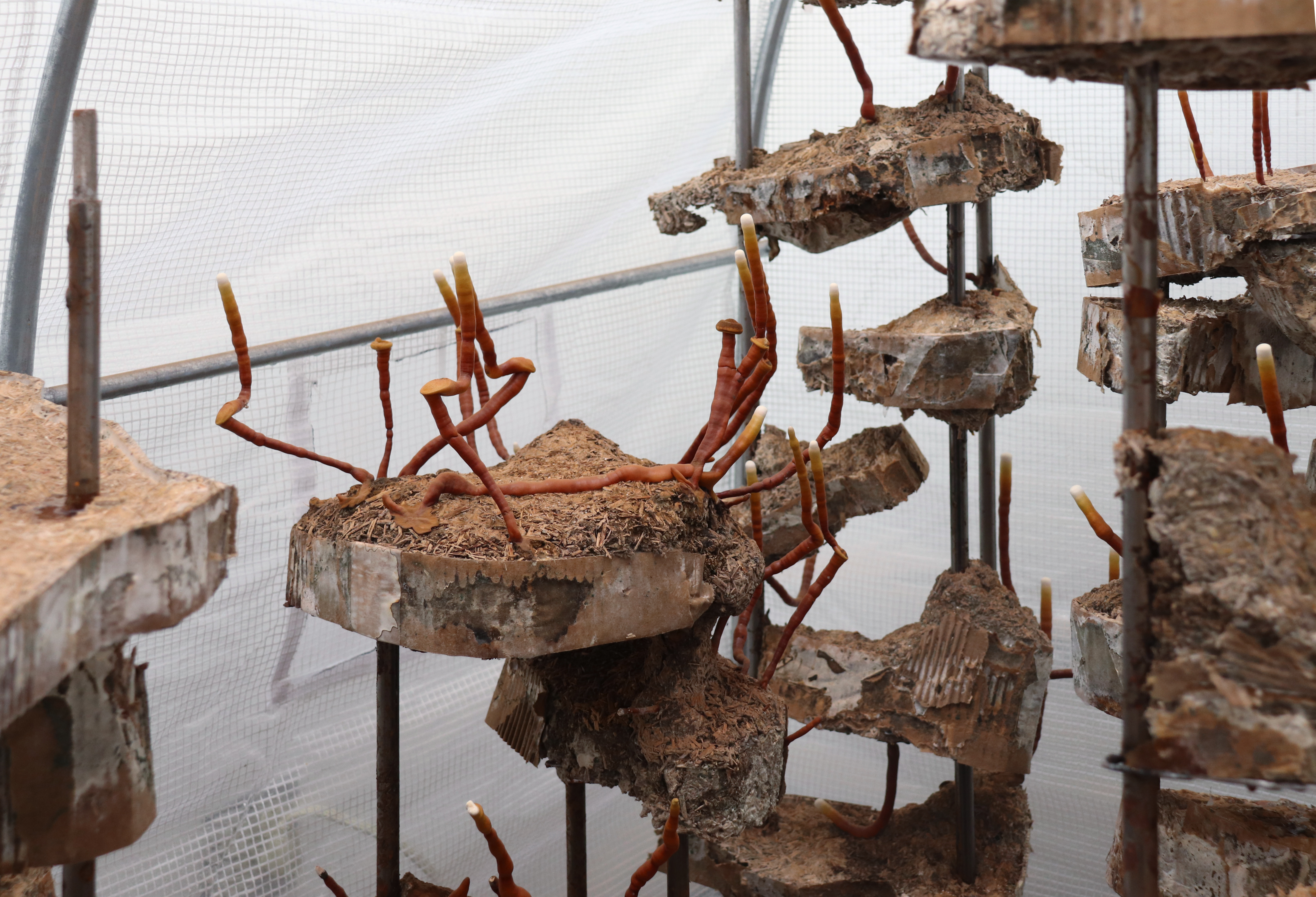
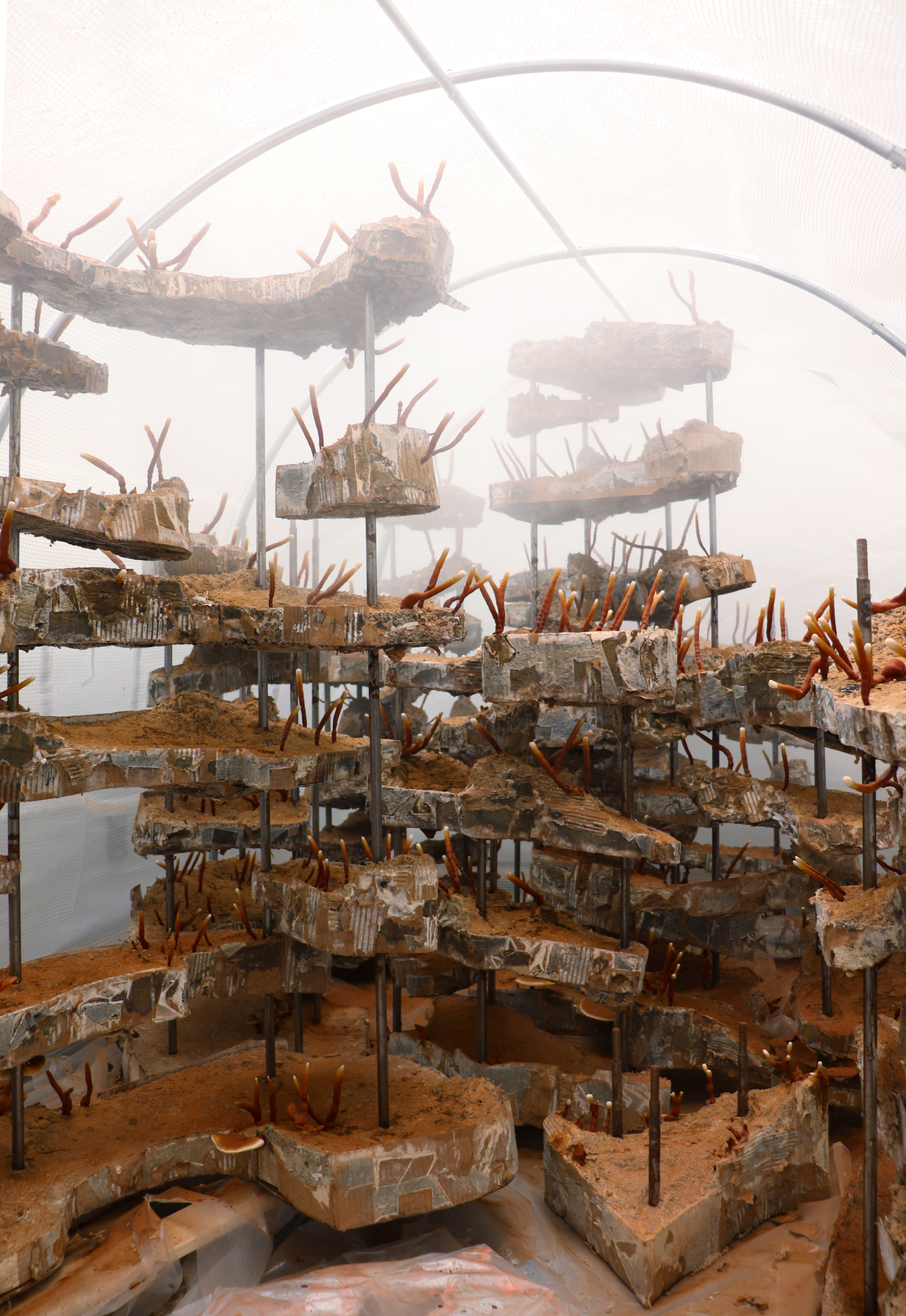
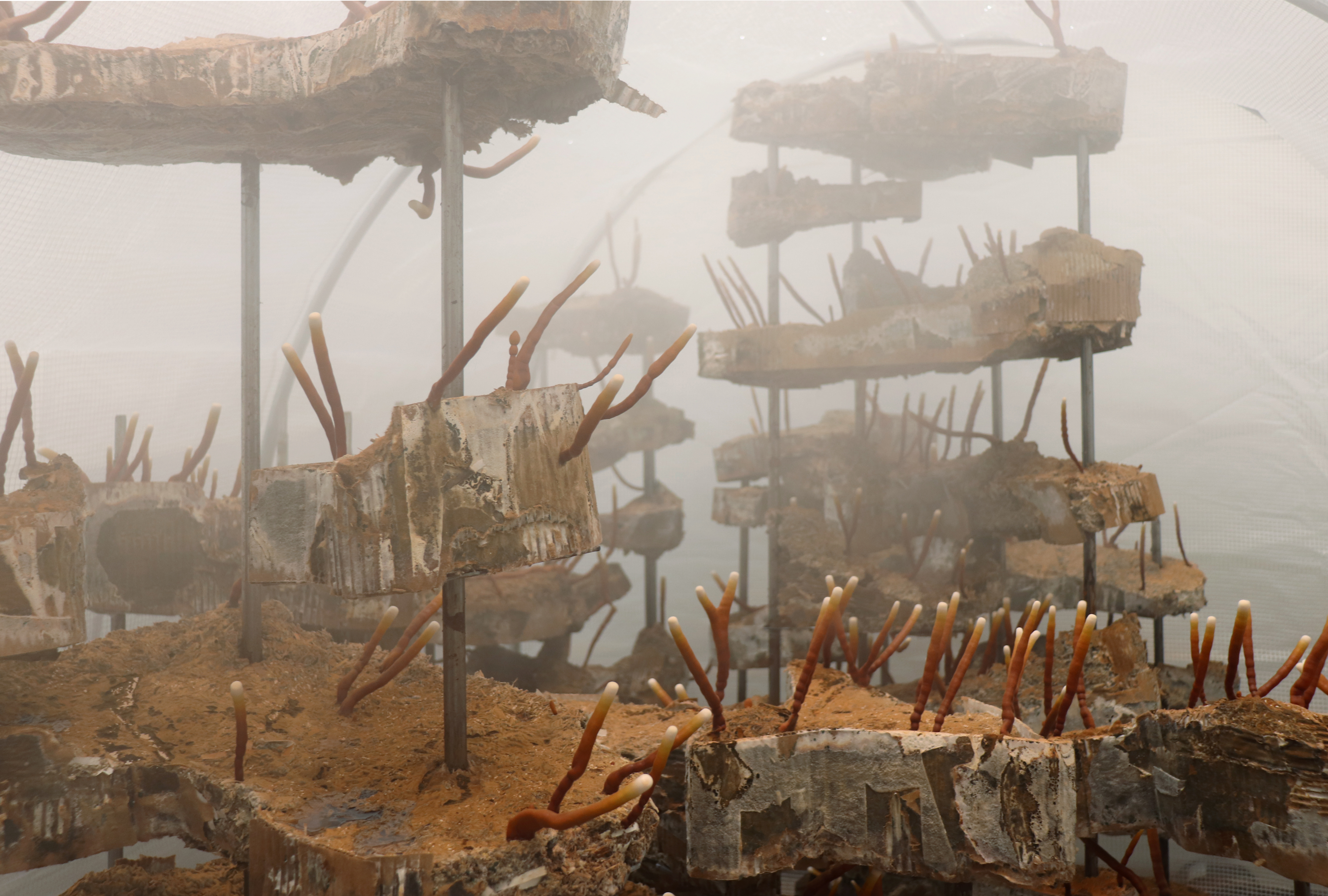
Images of Tangled Currents in progress, February & March 2025

Fragments, for the possibilities that lie ahead
part of Ground Truthing, solo exhibition at the Francis McCray Gallery, Silver City, NM
Fragments, for the possibilities that lie ahead, is an installation that uses sixty-two rocks collected from former mining sites in Silver City, New Mexico to examine alternative and more compassionate relationships with extractive industries. Each rock in this installation represents ten mines in Grant County, NM, which has approximately 620 active and former mines. Sculpted mycelium surround the rocks and are a symbolic gesture of care and repair. Fungi help with the erosion of rock, breaking them down into healthier soils, and in this instance, represent giving this ability to these discarded pieces. Here, the fungus is presented as an agent of care, capable of eroding rock and remediating soils. The rocks are displayed on an interlocking scaffolding, echoing the spaces they came from. Fragments, for the possibilities that lie ahead uses mycelium as material and methodology, reframing how we might treat consumption by viewing the more-than-human work as partners in a complex ecological web rather than a resource to exploit.


Fragments, for the possibilities that lie ahead
2026
Sixty-two rocks from Boston Hill Open Space, Silver City, NM (one for every ten mines in Grant Country, NM): collected from Adonis, Raven, Comanche, and North pits, reishi mycelium (Ganoderma Lucidum), hemp hurd, hardwood shavings, xanthan gum, guar gum, paper pulp, welded steel, 3D printed fixtures, spray paint.
Created with participation from WNMU students: Izzo Arteche, Delia deVer, Bella Drissell, Gabe Farley, Monique Gonzalez, Riata Lindley, Renee Maderazo, Alice Mancilla, Paul Maragay, Leticia Marquez, Melanie Matteliano, Thedra Perry, Melissa Terry, & Thomas Wentz
Variable dimensions, approximately 8’ x 6’ x 2’
2026
Sixty-two rocks from Boston Hill Open Space, Silver City, NM (one for every ten mines in Grant Country, NM): collected from Adonis, Raven, Comanche, and North pits, reishi mycelium (Ganoderma Lucidum), hemp hurd, hardwood shavings, xanthan gum, guar gum, paper pulp, welded steel, 3D printed fixtures, spray paint.
Created with participation from WNMU students: Izzo Arteche, Delia deVer, Bella Drissell, Gabe Farley, Monique Gonzalez, Riata Lindley, Renee Maderazo, Alice Mancilla, Paul Maragay, Leticia Marquez, Melanie Matteliano, Thedra Perry, Melissa Terry, & Thomas Wentz
Variable dimensions, approximately 8’ x 6’ x 2’


Conflux I
2026
graphite on paper
15” x 22”

Conflux II
2026
graphite on paper
15” x 22”

Conflux III
2026
graphite on paper
15” x 22”

Conflux IV
2026
graphite on paper
15” x 22”

Conflux V
2026
graphite on paper
15” x 22”